Commercial Combi vs. Convection Oven Selection
Comprehensive engineering guide comparing commercial combi ovens vs convection ovens, steam thermodynamics, meat shrinkage yield retention, Delta-T cooking, and price-to-ROI analysis.
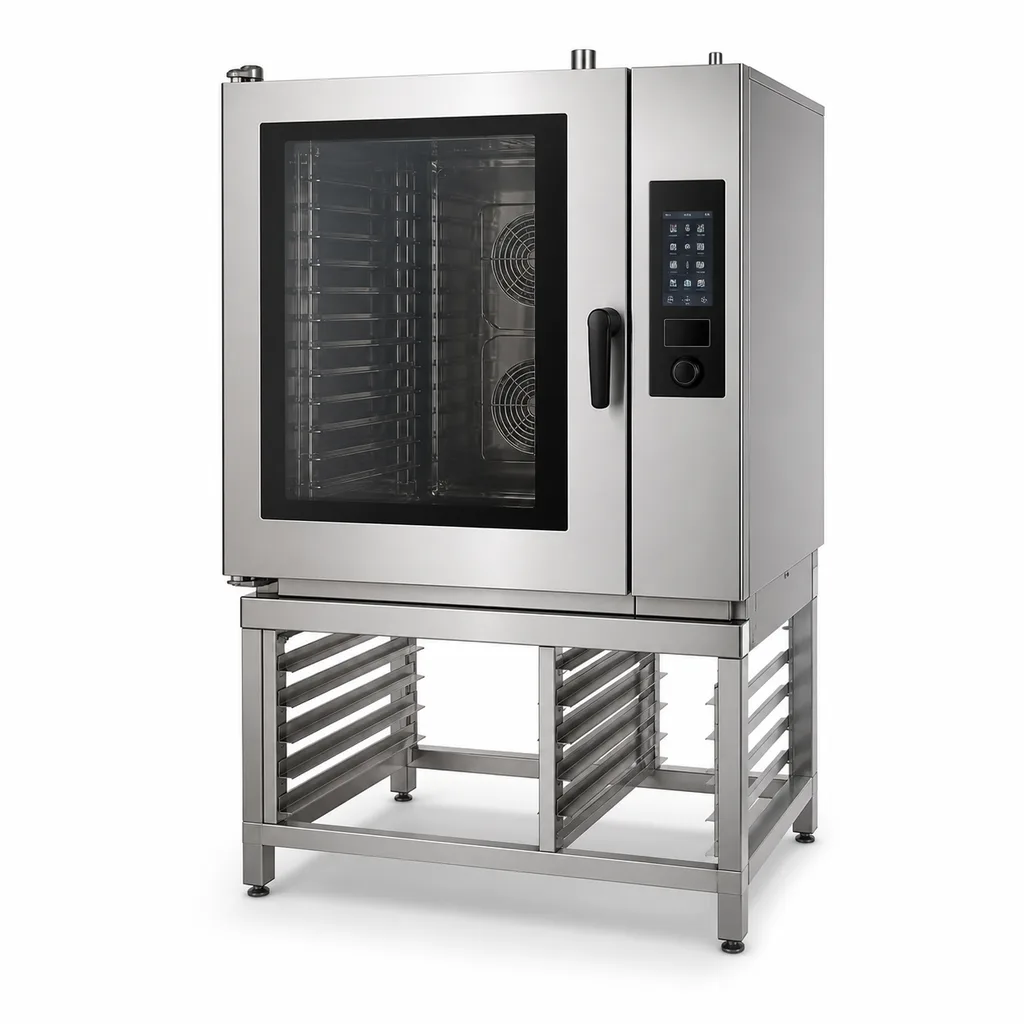
In commercial foodservice engineering, the thermal cookline represents the largest capital equipment investment and the primary driver of culinary output quality. When specifying commercial ovens, culinary operators frequently weigh the decision between standard commercial convection ovens and advanced multi-function commercial combi ovens (combination convection-steamer ovens). While a commercial convection oven circulates dry heated air, a combi oven precisely integrates humidity, convection, and steam to accelerate heat transfer, reduce protein shrinkage, and automate complex cooking curves. This technical guide provides an engineering analysis of combi vs. convection thermodynamics, food yield retention ROI, utility costs, and price benchmarks.
Figure 1: Commercial combi oven chamber featuring variable-speed bidirectional fan wheels, steam injection, and multi-point core temperature probes.
1. Thermodynamic Principles: Dry Forced Air vs. Humid Steam Convection
Thermal energy transfer into food items occurs significantly faster in a humid environment due to the thermodynamic properties of water vapor:
| Engineering Parameter | Commercial Convection Oven | Commercial Combi Oven (Steam + Convection) |
|---|---|---|
| Heat Transfer Medium | Dry circulating hot air (0% relative humidity) | Variable humidity: 0% to 100% RH saturated steam + hot air |
| Thermal Convective Heat Transfer (λ) | Air thermal conductivity ≈ 0.026 W/m·K (Slow heat transfer) | Water vapor conductivity ≈ 0.60 W/m·K (23x higher thermal transfer) |
| Cooking Modes Available | Convection bake, roast, reheat | Pure steam (30°C-130°C), Combisteam (30°C-300°C), Dry convection, Delta-T slow roast, Sous-vide |
| Cooking Velocity (Cook Time) | Baseline speed (25% faster than conventional radiant ovens) | 30% to 50% faster than convection ovens due to latent heat release |
| Protein Shrinkage / Moisture Loss | High moisture loss (25% - 35% weight reduction in meats) | Low moisture loss (10% - 15% weight reduction); preserves natural juices |
2. Meat Shrinkage & Food Cost Yield Retention ROI Formula
The primary economic justification for investing in a commercial combi oven is protein yield retention. In institutional dining, hotel banquets, and high-volume roast operations, moisture loss directly inflates food costs:
ROI Calculation Example: A banquet kitchen roasting 15,000 kg of prime rib/poultry annually at $12.00/kg:
• Convection Oven (30% shrinkage) = 10,500 kg finished yield
• Combi Oven (15% shrinkage) = 12,750 kg finished yield (+2,250 kg retained meat)
• Annual Cash Savings = 2,250 kg × $12.00/kg = $27,000 Annual Food Cost Reduction.
The entire $18,000 price premium of an advanced 10-pan combi oven is recouped in under 8 months from food yield savings alone.
3. Steam Generation Engineering: Boilerless (Direct Injection) vs. Steam Boiler
Combi ovens generate moisture via two competing mechanical architectures:
| Steam Architecture | Mechanical Operating Principle | Capital Cost & Footprint | Maintenance & Descaling | Best Suited Culinary Application |
|---|---|---|---|---|
| Boilerless (Direct Injection) | Water injects directly onto spinning heating elements; atomized into flash steam by fan | Lower initial Capex; compact internal chassis | Minimal scale buildup; easy automated acid wash | A la carte restaurants, bakeries, general roasting, intermittent steam use |
| Dedicated Steam Boiler Generator | External heated pressure tank produces high-volume continuous saturated steam | Higher initial Capex; larger equipment footprint | Requires frequent boiler descaling and water softening | High-volume institutional banquets, continuous dim sum steaming, large seafood kitchens |
4. Comprehensive Price & Sizing Benchmarks
Equipment costs vary significantly by pan capacity, energy source (gas vs. electric), and technical automation level:
| Oven Category & Size | Standard Convection Oven Price (USD) | Premium Commercial Combi Oven Price (USD) | Utility MEP Requirements |
|---|---|---|---|
| Half-Size Countertop (4 - 5 Pan GN 1/1) | $2,800 - $4,500 | $7,500 - $12,000 | 230V 1-Phase / 5 kW; 3/4" softened cold water; 1.5" drain |
| Full-Size Standalone (6 - 10 Pan GN 1/1) | $4,800 - $8,500 | $13,500 - $22,000 | 400V 3-Phase / 18 kW; 3/4" water inlet; 2" air-gap drain |
| Floor Model Roll-In (20 - 40 Pan GN 1/1 / GN 2/1) | $11,000 - $16,500 | $26,000 - $45,000+ | 400V 3-Phase / 38 kW (or 140,000 BTU gas); 2" drain line |
5. Automated Delta-T Slow Roasting & Core Probe Physics
High-end combi ovens incorporate multi-point core temperature probes and Delta-T cooking algorithms:
- Delta-T Constant Temperature Differential: The oven chamber temperature dynamically tracks the internal meat core temperature, maintaining a constant 20°C to 30°C differential (ΔT) above the meat as it slowly heats up over 8 to 12 hours. This eliminates the scorching temperature gradients that dry out outer meat layers, producing tender, perfectly pink edge-to-edge roasts.
- Automatic Rethermalization & Banquet Plating: Up to 100 cold plated meals can be wheeled into a 20-pan combi oven inside mobile plate banquet carts. Operating in combisteam mode at 130°C with 60% humidity, meals are rethermalized in 7 minutes without condensation puddles or food drying out.
6. Multi-Stage Automated Recipe Programming Architecture
Unlike simple convection ovens with basic mechanical timers, commercial combi ovens allow executive chefs to program multi-phase cooking profiles:
| Cooking Phase | Oven Climate Mode | Target Chamber Temp | Relative Humidity (% RH) | Fan Speed | Culinary Action & Benefit |
|---|---|---|---|---|---|
| Phase 1: Steam Seeding | Pure Saturated Steam | 95°C (203°F) | 100% RH | Low (40%) | Transfers latent heat instantly; gelatinizes starches without surface dehydration |
| Phase 2: Core Retherm / Roast | Combination Steam | 145°C (293°F) | 40% RH | Medium (70%) | Gentle heat penetration to core probe target; halts protein contraction |
| Phase 3: Maillard Crisp | Dry Convection (Damper Open) | 210°C (410°F) | 0% RH (Evacuated) | High (100%) | Rapid caramelization of surface dextrins for golden blistered crust |
7. Automated Chemical Cleaning & Closed-Loop CIP Systems
Modern combi ovens eliminate manual interior scrubbing via automated Clean-In-Place (CIP) cycles:
- Dual-Action Chemical Injection: Built-in peristaltic pumps draw heavy alkaline degreasing liquid and acidic rinse neutralizer from internal canisters (or utilize dissolvable solid chemical tablets).
- Rotating Wash Impellers: High-pressure spray impellers mounted in the chamber ceiling blast water at 65°C across fan shrouds and behind baffle plates, dissolving baked-on animal fats and flushing grease down the drain.
8. Microbiological HACCP Pasteurization & Core Temperature Curves
Commercial combi ovens record legal proof of foodborne pathogen destruction (such as 6-log reduction of Salmonella enterica):
HACCP Compliance: Combining low-temperature steam with continuous core probe logging allows facilities to pasteurize delicate proteins (poultry, roasts) at lower core temperatures (e.g., 63°C held for 3 minutes) rather than boiling them dry, preserving moisture while satisfying food safety audits.
9. Inverter Fan Aerodynamics & Boilerless Direct Injection
Uniform heat transfer inside a commercial combi oven chamber depends on micro-stepped bidirectional airflow and fine water droplet vaporization:
| Core Mechanism | Standard Commercial Convection | Premium Commercial Combi Oven |
|---|---|---|
| Fan Impeller Drive | Single or dual-speed AC induction motor (1,450 / 2,800 RPM) | Brushless DC Inverter Motor with 5 - 8 programmable micro-speeds (250 to 3,000 RPM) for delicate pastries and soufflés. |
| Airflow Auto-Reversal | Fixed unidirectional rotation or slow 5-minute reverse switch | Bidirectional Auto-Reverse Every 90 - 120 Seconds with dynamic active motor braking for zero dead-zone thermal distribution across 10-20 hotel pans. |
| Steam Generation Method | External boiler reservoir or basic drip plate | High-Pressure Direct Atomization: Water is pulsed through calibrated spray nozzles directly onto the center of high-temperature spinning fan blades and heating elements, achieving 100% instant flash steam without boiler maintenance overhead. |
Commercial Kitchen Financial Proof: A banqueting hotel roasting 18,000 kg of beef ribeye and prime ribs annually reduces shrinkage from 24% (standard convection) down to 14% (combi slow-roast steam hold). Recovering 10% meat yield yields 1,800 kg of saleable cooked product, saving $27,000 annually ($15/kg meat benchmark), which amortizes the combi oven capex in under 11 months.
10. Lambda Oxygen Sensors & Ventless Steam Condensing Hoods
Modern commercial combi ovens achieve pinpoint relative humidity control and flexible kitchen placement through advanced electronic sensor manifolds:
| Advanced Subsystem | Technical Architecture | Operational & Financial Benefit |
|---|---|---|
| Solid-State Zirconia Lambda Sensor | Continuous oxygen partial pressure measurement in 250°C steam environment | Calculates exact steam volume percentage (0% to 100% RH); commands proportional water injection pulses to maintain set humidity within ±1% RH, preventing moisture loss in baked cheesecakes and terrines. |
| Integrated Ventless Condensing Hood | Dual-stage cold water vortex spray nozzle and high-efficiency particulate air filter | Condenses 99% of discharged steam and grease aerosols during door opening; eliminates expensive dedicated Type I overhead stainless exhaust ductwork in retail kiosks, airport concessions, and front-of-house finishing stations. |
| Multi-Timer Pan Rack Management | Independent optical door sensors with per-shelf digital countdown timers | Allows commercial kitchens to cook 10 different menu items with varying cook times simultaneously; the oven microprocessor dynamically adjusts shelf cooking timers if the door is opened to reload pans. |
| Triple-Pane Low-E Glass Door Assembly | Triple-glazed ventilated thermal barrier with dual heat-reflective Low-E coatings | Reduces door outer surface temperature to < 45°C (< 113°F), preventing chef contact burns in cramped line kitchens while reducing radiant thermal heat loss by 18%. |
Featured Commercial Equipment Models
Professional 10-Pan Combi Ovens
High-efficiency digital touchscreen combi ovens with automatic boiler descaling and core probes.
View Combi Ovens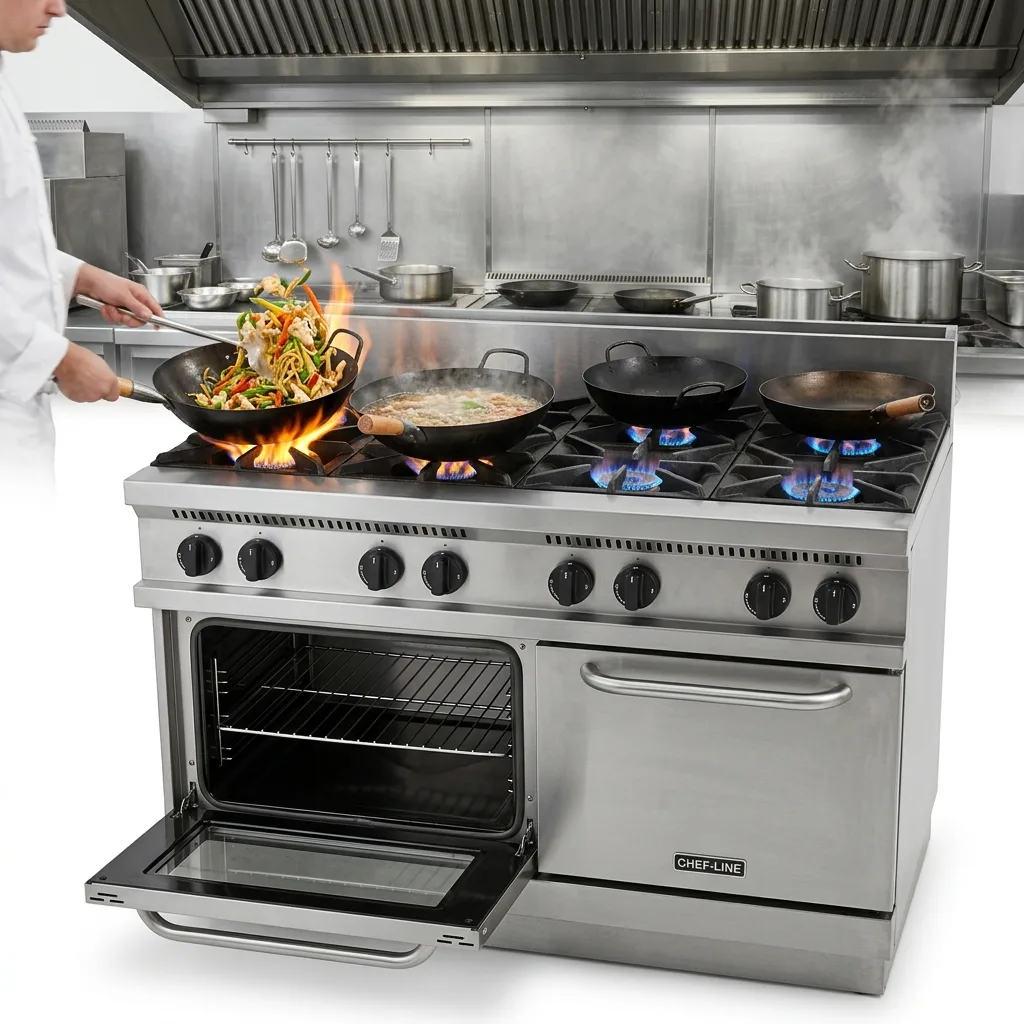
Heavy-Duty Convection Ovens
Rugged commercial gas and electric convection ovens engineered for bakery sheet pan production.
View Convection Ovens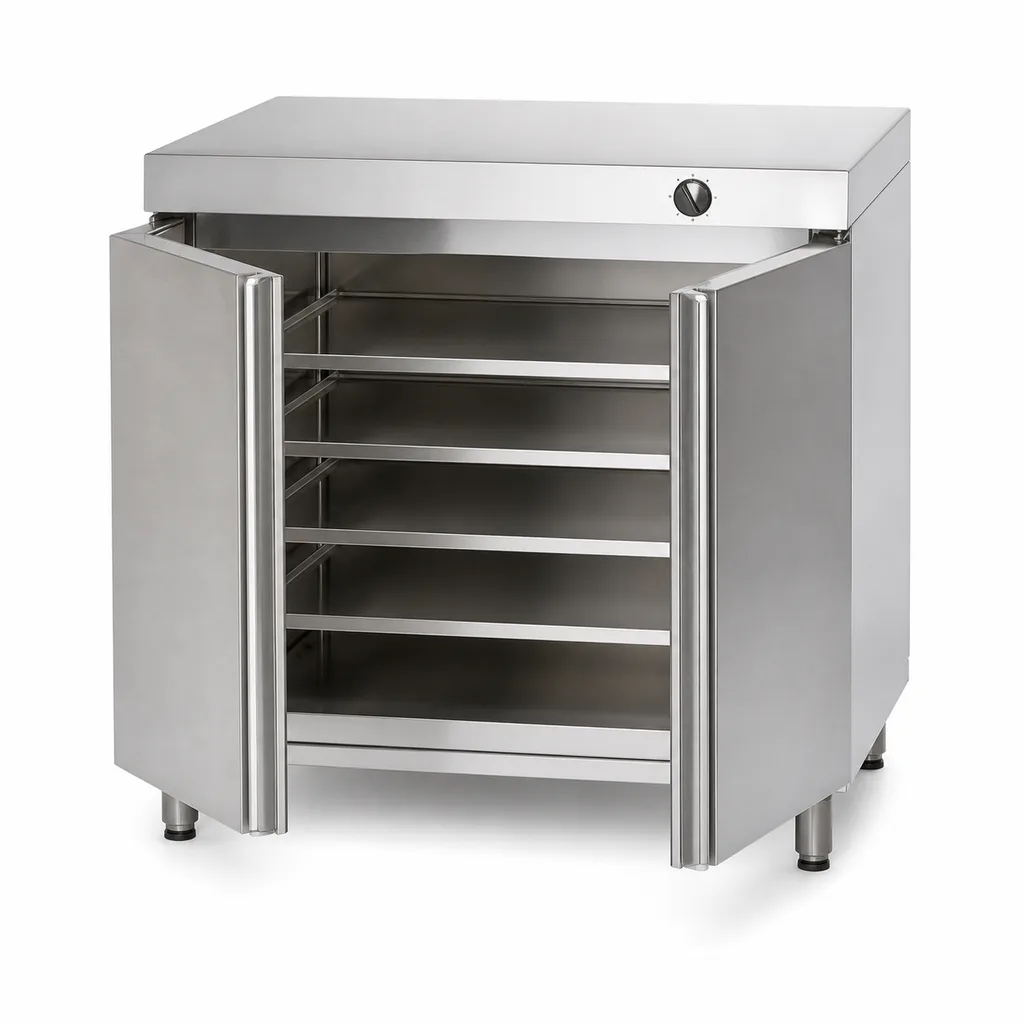
Banquet Plate Warming Trolleys
Mobile insulated banquet holding carts designed to interface with roll-in combi oven retherm carts.
View Banquet Carts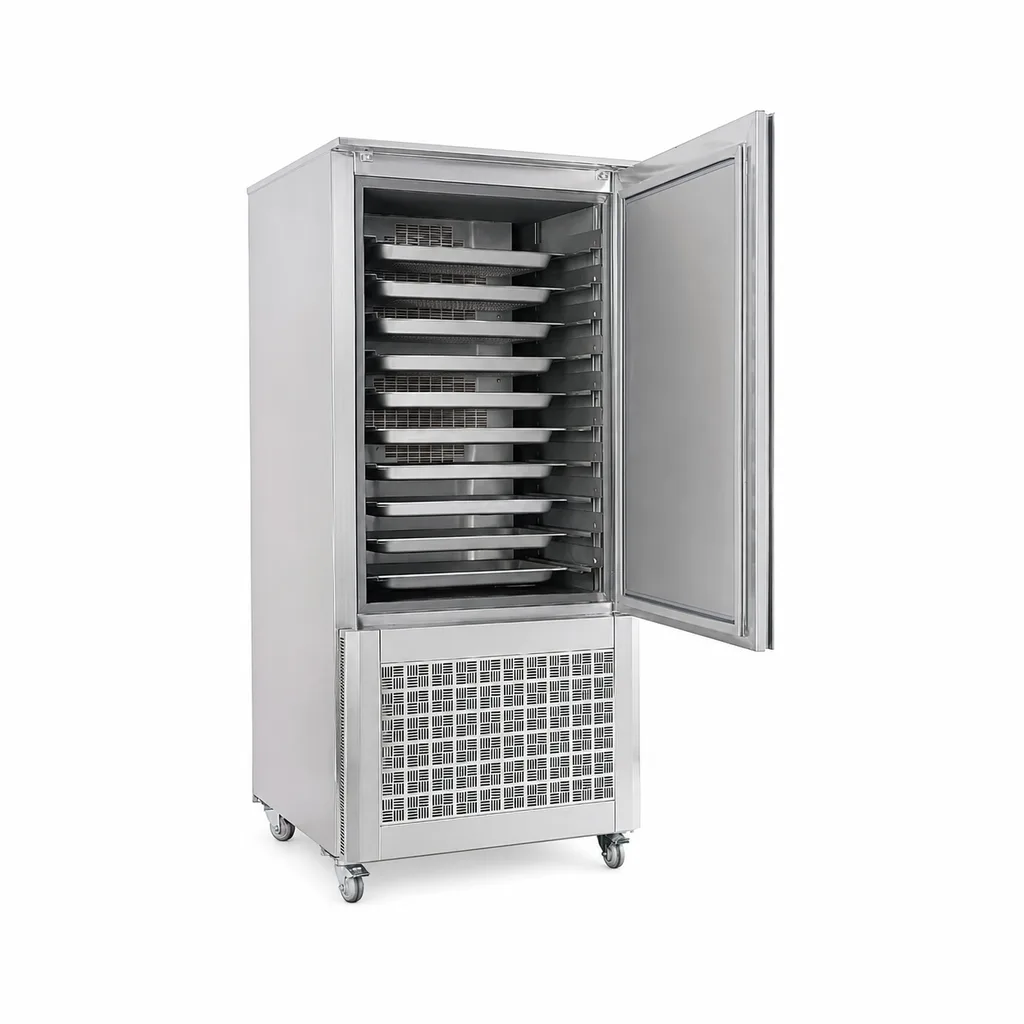
Cook-Chill Blast Freezers
Heavy-duty commercial blast chillers designed to rapidly pull down combi oven cooked batches.
View Blast ChillersTurnkey Engineering Solutions & Applications
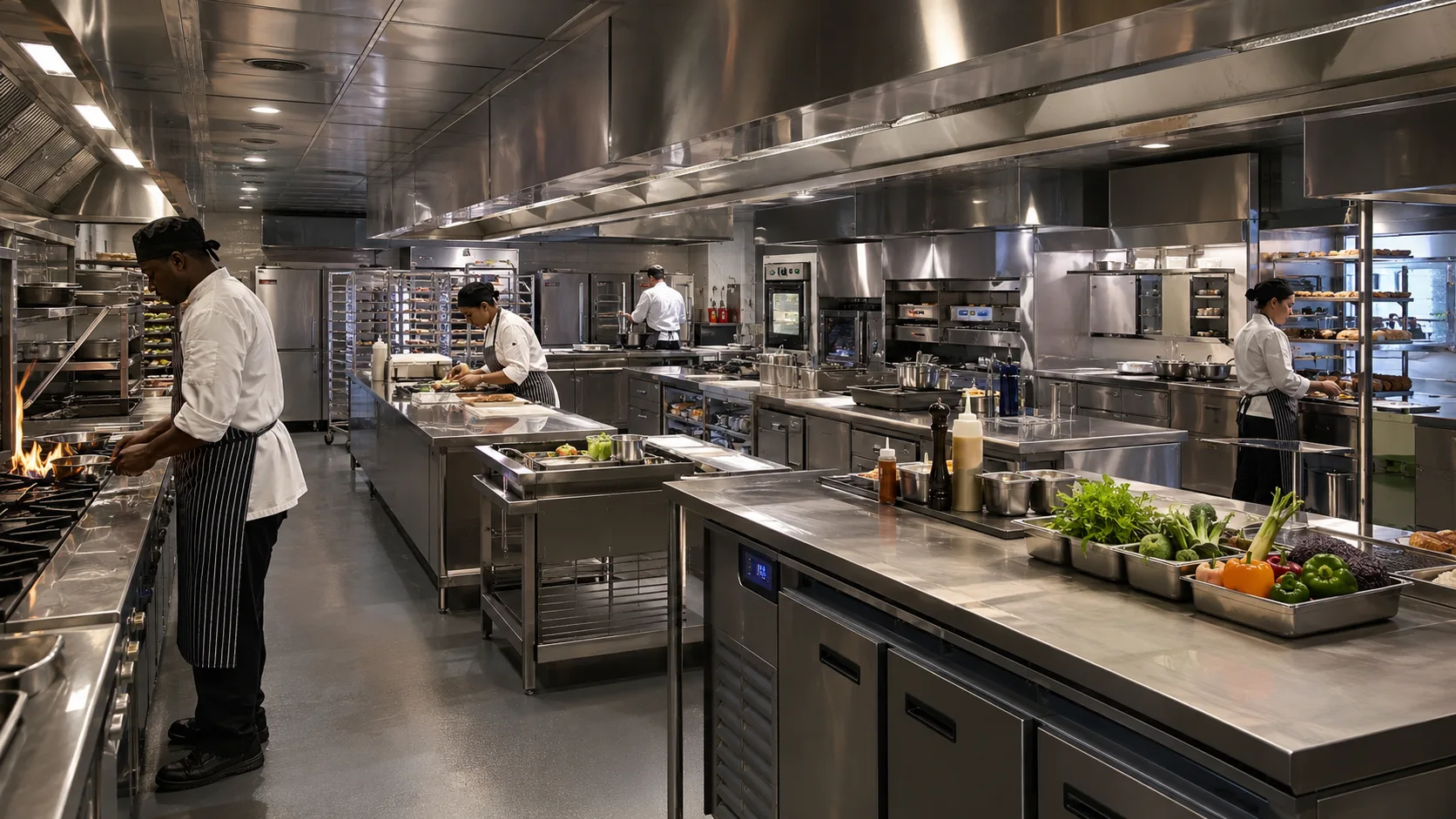
Hotel Banquet Cook-Chill Lines
Complete combi oven and blast chiller integration engineered for multi-hall hotel banqueting.
Explore Hotel Solutions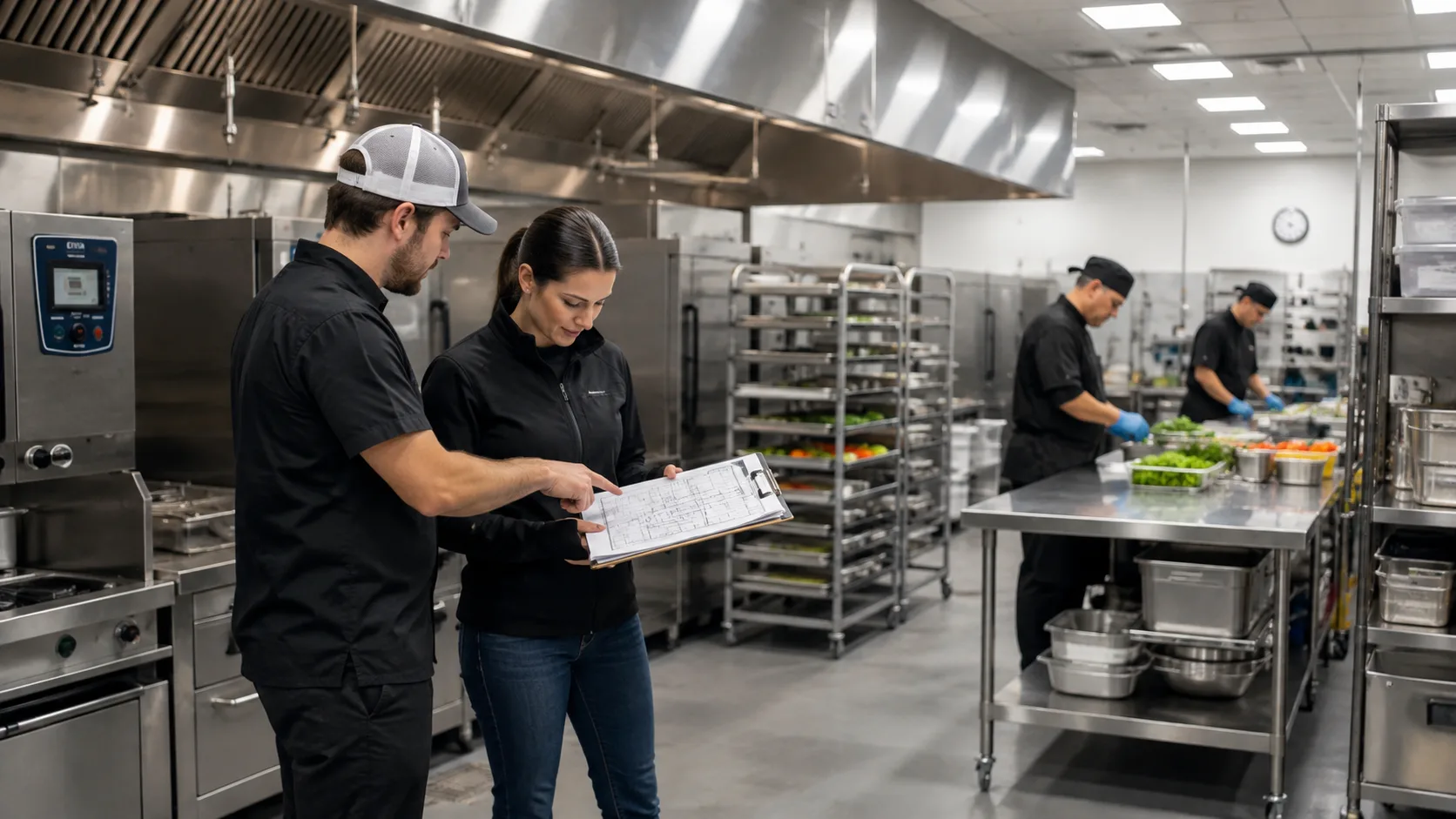
Central Commissary Production
Industrial roll-in combi oven banks built for high-volume automated meal factory production.
Explore Central Kitchen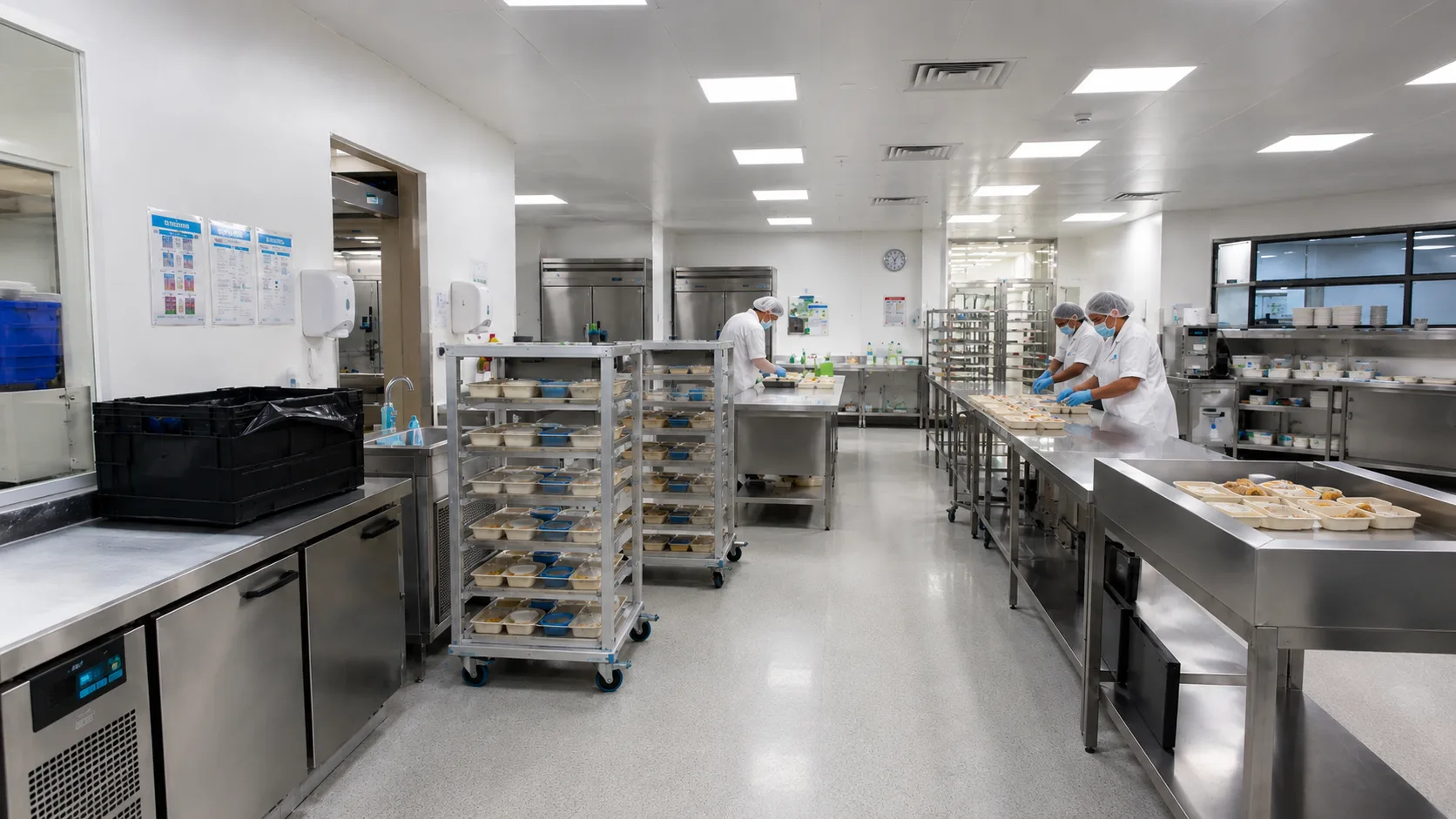
Healthcare Dietary Retherm
Precision steam-retherm combi cooking suites engineered for strict hospital dietary nutritional standards.
Explore Hospital Solutions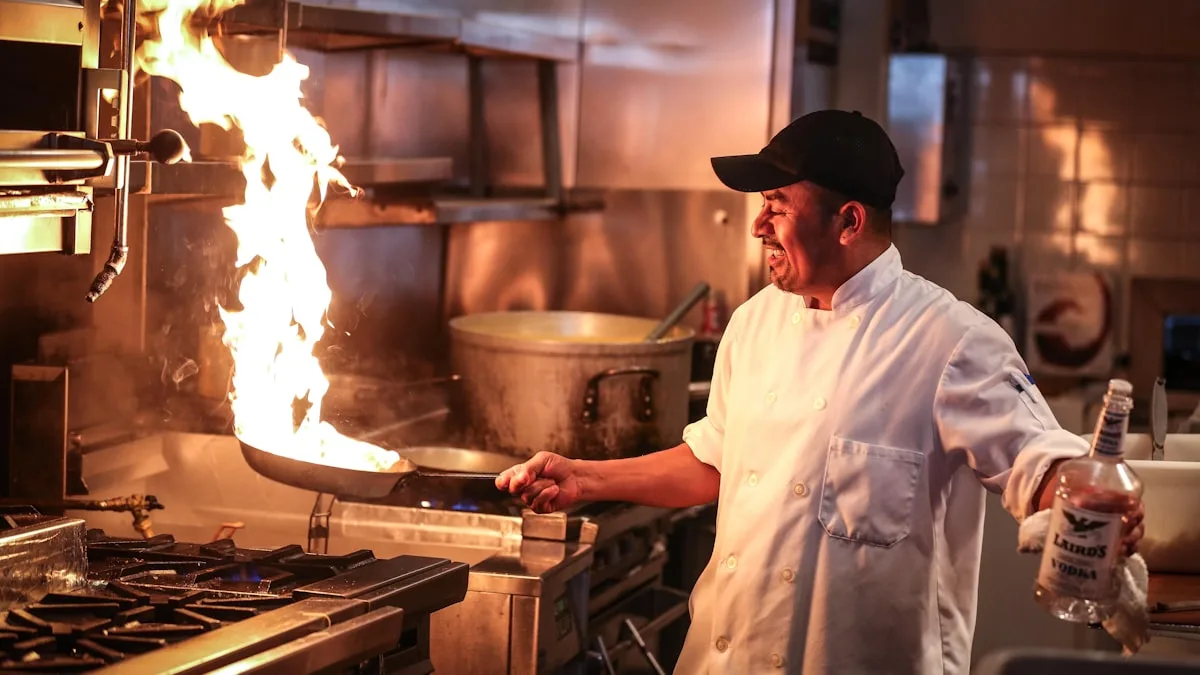
A La Carte Gastropub Kitchens
Compact 6-pan countertop combi ovens optimizing space and menu flexibility in commercial restaurants.
Explore Restaurant SolutionsFrequently Asked Questions
What can a combi oven do that a convection oven cannot?
A combi oven can steam, poach, roast with controlled humidity, bake crusty breads with steam injection, sous-vide cook, rethermalize plated banquets without drying, and execute overnight Delta-T slow roasts, replacing separate steamers, roasting ovens, and holding cabinets.
Why are combi ovens so much more expensive than convection ovens?
Combi ovens feature precision steam boilers or injection systems, multi-speed bidirectional fan motors, digital touchscreen recipe microprocessors, integrated automated self-cleaning acid wash pumps, and marine-grade 304/316 stainless steel chambers engineered to resist steam corrosion.
What water connections are required for a commercial combi oven?
Combi ovens require two water supply lines: a softened cold water line (hardness < 3 GPG) for steam generation, and a raw water line for the condenser drain cooling manifold, paired with a 2-inch drain with a physical air gap.
How does a combi oven reduce commercial meat shrinkage?
Cooking in a saturated humidity atmosphere prevents surface moisture from evaporating off the meat, cutting protein shrinkage from 30%-35% (in dry convection ovens) down to 10%-15%, which preserves valuable product weight and juice.
Is a boilerless combi oven better than a boiler-based combi oven?
Boilerless combi ovens are more compact, cost less, and require less intensive descaling, making them ideal for most restaurants. Boiler-based combi ovens deliver continuous high-volume steam, making them superior for institutional operations that steam hundreds of kilograms of food continuously.
Plan the Equipment Around Your Kitchen.
Share your menu, peak service demand, available space and site utilities. Tell us which equipment you are considering so we can review the requirements with you.