Commercial Oven for a Food Truck
Compare food-truck oven formats by onboard menu, batch timing and tray movement. Check complete working space, utility overlap and the exact model's suitability.
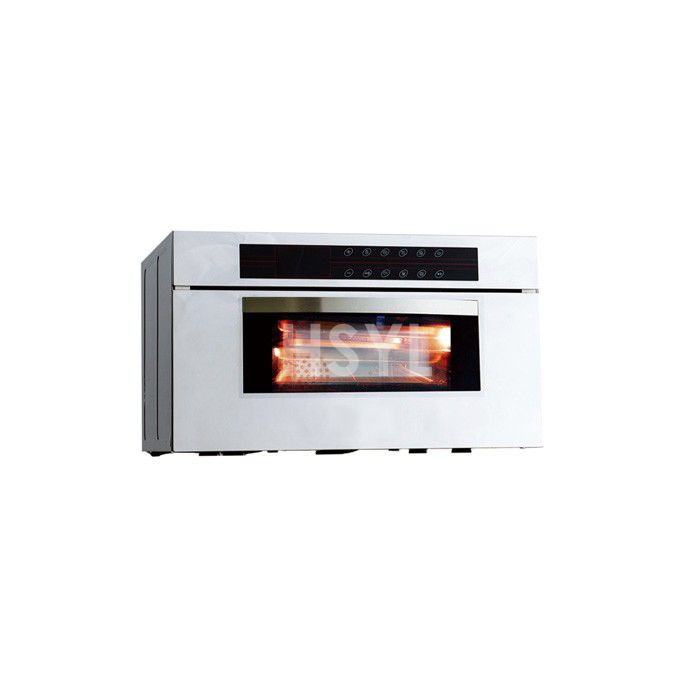
A commercial oven for a food truck should earn its space by doing a defined onboard job. Batch baking, mixed cooking and finishing individual orders need different oven formats. If all baking is completed at the preparation base, an onboard oven may be unnecessary; storage and suitable service equipment may be the more useful investment.
This guide focuses on choosing the oven station. Vehicle layout, fuel systems, electrical supply, fire protection and permitted operation still require coordinated design for the complete truck.
Choose the oven format from the onboard menu
| Onboard task | Format to investigate | What can rule it out |
|---|---|---|
| Bake trays of pastries or similar products | Suitable convection oven | Incompatible tray size, insufficient loaded performance or unworkable door and cooling space |
| Use dry heat and steam for a mixed menu | Combi oven with the required modes | Additional services or cleaning work outweigh the useful menu functions |
| Finish individual hot orders from prepared ingredients | Validated rapid-cook or other finishing oven | A small usable cavity or unsuitable product process creates a queue |
| Make pizza where the baking surface defines the product | A suitable deck or dedicated pizza oven | Weight, heat, services and operating space cannot fit the vehicle plan |
These are equipment classes, not a claim that every class or configuration is available in the HSYL range. Begin with the desired food result, then compare actual offered models. “Compact” describes an appliance size; it does not establish transport approval or low electrical demand.
Find the bottleneck using a batch schedule
Illustrative schedule: suppose the menu needs 60 finished items over a 30-minute peak. A proposed loaded process produces 20 acceptable items per complete ten-minute cycle, including changeover. Three cycles would nominally meet the total, but leave no spare time for delays. Customers arriving together can still face a queue.
If products cannot be held at acceptable quality, preparing all 60 early is not a solution. Compare a larger demonstrated batch, independent cooking capacity, a different order promise or a simpler menu. Use a real loaded trial to supply the cycle and batch values; do not infer them from the number of rack positions.
A pizza menu also needs a topping station and a finished-product landing area. A pastry menu needs tray storage and cooling space. Include those operations when calculating what can reach the service window.
Draw the tray route at full size
Mark the oven body, connections, required clearances and fully open door. Then use the actual tray dimensions to trace a load from preparation into the oven and out to a heat-resistant landing area. Keep that movement clear of another operator, refrigeration doors and the customer handoff.
- Door direction: a door opening into the only working aisle can prevent simultaneous service.
- Loading height: a tray of hot liquid demands different handling from a light tray of bread.
- Support: the work surface and mounting must be suitable for the operating load and approved vehicle use.
- Service access: filters, panels and connections must remain reachable after installation.
- Removal: allow a route to replace the oven without dismantling the entire truck interior.
Do not invent a generic clearance from the appliance width. The installation drawing for the selected model defines the required spaces; the tray exercise checks whether the resulting station can actually be used.
Compare utilities through the whole day
Preheating may coincide with refrigeration starting, water heating and other cooking equipment. During service, a heating cycle may coincide with a fryer load. The electrical designer needs those conditions as well as the rated voltage, phase, frequency and input.
For a combi oven, include the actual water, treatment and drainage arrangement required by that model. Portable water storage does not automatically make an appliance compatible with the vehicle. A model described as ventless also needs its listing, menu restrictions and local acceptance checked; the word alone is not permission to omit ventilation.
Travel and service are separate states. Confirm how the appliance is secured and which operating states the manufacturer permits. Do not assume an oven may run while the truck is moving.
Use a product enquiry to eliminate unsuitable configurations
The CK-HCO-2A combi oven provides a specific compact model to investigate if the menu needs its cooking modes. The HCO10.2E combi oven is a separate model enquiry, not evidence that either unit is approved for a truck.
For each offered unit, compare usable trays, loaded food results, supply requirements and the complete installation envelope. A generic oven image or another model's rack count cannot establish those details. If your job is exclusively dry baking, include an appropriate convection candidate rather than buying steam functions without a menu need.
Compare oven formats against your truck layout
Use the two oven references to define a tray and services comparison. A smaller-looking body does not establish adequate output or suitability for transport.
CK-HCO-2A Combi Oven
Assess the CK-HCO-2A format against the menu, usable tray space and the full door-opening route. Request the exact services and mounting information for the proposed vehicle installation.
View product details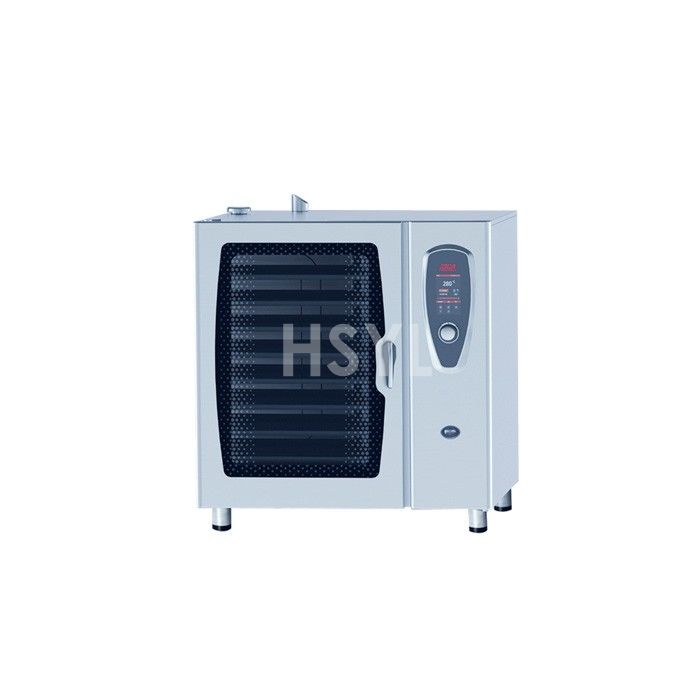
HCO10.2E Combi Oven
Include the HCO10.2E format when comparing rack loading and competing batch jobs. Check the full station footprint and utilities, then test the actual products at the intended loading.
View product detailsAccept the complete oven station
Use a repeated service trial with normal staff, stock and packaging. Observe the first batch, subsequent batches and simultaneous orders. Record acceptable finished items, handling time and any disruption to other stations. Include cooldown, cleaning and the transition back to vehicle travel.
Request an onboard oven comparison with the dishes cooked in the truck, tray dimensions, peak schedule, station drawing and supply details. The useful result is a model that completes the required job within the vehicle's constraints, not simply an oven that fits through the door.
Frequently Asked Questions
When can a food truck avoid carrying an oven?
If baking is completed at the preparation base and the menu does not need oven cooking or finishing onboard, an oven may add little value. Compare the actual food quality and service process with a setup focused on storage and suitable holding or other finishing equipment. Keep an onboard oven only when a defined menu task justifies its space, weight and services.
Can a compact countertop oven use an ordinary socket?
Compact describes size, not electrical compatibility. Check voltage, phase, frequency, input rating and connection requirements for the exact model. Include the oven in the vehicle's full load schedule; a physically small unit can still require a supply or connection that is unavailable onboard.
How do I check whether the oven station will work in a narrow aisle?
Mark the oven body and required installation spaces, then open the door fully and trace a real tray from preparation into the oven and onto a heat-resistant landing surface. Repeat the movement with another operator using the neighboring station. This exposes conflicts that a closed-appliance dimension alone will miss.
Does an oven photograph prove food-truck suitability?
No. A product photograph identifies the appliance for further assessment; it does not establish a suitable vehicle installation. Mobile mounting, transport, services and permitted operation need confirmation for the exact configuration. Check the complete truck plan and the selected model's installation instructions before ordering.
Plan the Equipment Around Your Kitchen.
Share your menu, peak service demand, available space and site utilities. Tell us which equipment you are considering so we can review the requirements with you.