Industrial Baking Oven
Define product, tray load, complete batch time and acceptance criteria for an industrial baking oven enquiry. Distinguish bakery production from support ovens.
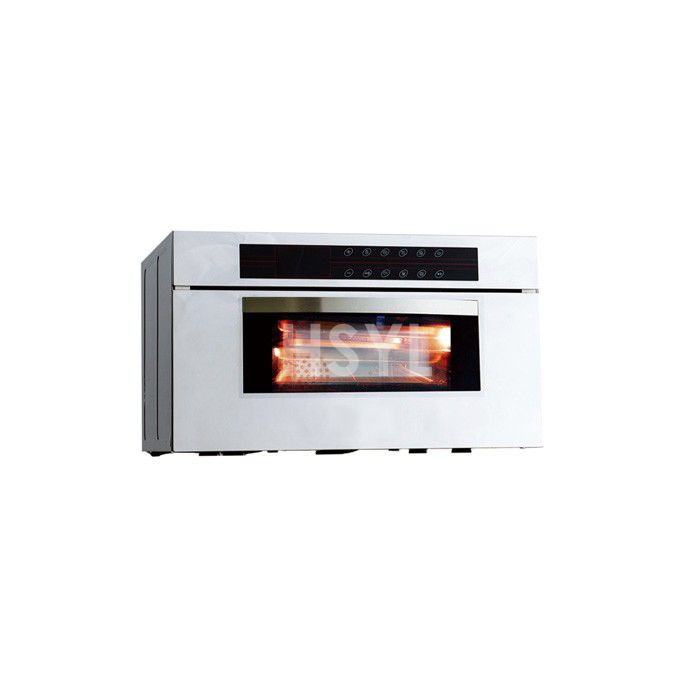
An industrial baking oven enquiry should start with the product leaving the line: its size, weight, finish and required delivery time. “Industrial” does not define a production rate. An oven with a large chamber can still miss the target if tray loading, recipe changes or downstream cooling limit the process.
Describe the baking process, not just an hourly target
Provide the dough or batter type, piece weight and dimensions, starting condition and the required finished result. Include the tray or mould material and outer dimensions. If the product needs a particular humidity stage, top/bottom heat balance or conveyor residence pattern, describe that requirement rather than choosing from the oven's marketing name.
For several products, identify which must run in the same service window and which can be scheduled separately. A capacity test on one small, fast-baking item does not establish output for a larger loaf or a different mould.
Build a batch schedule with whole finished loads
For batch production, record usable tray positions, pieces per tray and the number of acceptable pieces per load. Then measure the complete start-to-start cycle: loading, baking, unloading and preparation for the next load.
Illustrative example, not a model rating: assume a verified load yields 48 acceptable pieces and the complete cycle takes 24 minutes. The average rate is 48 ÷ 24 × 60 = 120 pieces per hour across continuous cycles. Starting from an empty, preheated oven, only two complete cycles finish within the first 60 minutes, yielding 96 pieces. The third load finishes at minute 72.
Add initial preheating to the start-up plan and recipe changeovers to the production plan. For a fixed dispatch deadline, count the actual loads finishing before that deadline rather than using a rounded average rate.
Choose a production format for the work
| Production need | Configuration question | Evidence to request |
|---|---|---|
| Frequent recipe changes or small separate orders | Would independent batch chambers suit the schedule? | Changeover sequence and verified results for the named products. |
| Repeated loads using racks or trolleys | Does the offered oven accept the actual loaded rack? | Rack interface, load drawing, manoeuvring space and loaded bake trial. |
| Continuous, repeatable production | Is a continuous oven and its upstream/downstream line appropriate? | Product-specific throughput, residence conditions and line interface information. |
These are configuration questions, not a statement that every oven type is available in the HSYL range. Request a model-specific proposal for the production format you need.
Keep a support oven separate from the industrial line specification
The CK-HCO-2A combi oven page lists a compact appliance with dimensions of 598 × 508 × 420 mm and a 220V-50Hz supply. Those data can help assess a support station, but they do not establish the tray loading or output of an industrial baking operation.
If you need a main production oven, ask for the usable chamber or conveyor dimensions, approved loading arrangement and representative test results. Do not substitute an external appliance size for baking capacity.
Make the bake trial useful to production
Agree on acceptance criteria for colour, texture, dimensions and other product requirements before testing. Use the intended tray pattern and inspect output across the load, not only a selected sample. Record rejects and the operator actions needed to achieve the result.
Check the neighbouring stages at the same time: mixing or forming must feed the oven; cooling and packing must clear it. A successful oven test does not prove that the whole line can sustain that output.
Before finalising the equipment location, obtain the connection schedule, ventilation requirements, delivery route, access and cleaning instructions for the proposed machine. Keep required site work in the project scope rather than treating the equipment price as the completed installation cost.
Related Products
These are commercial oven references to assess against a baking brief, not evidence of an industrial bakery line or a guaranteed baking output.
CK-HCO-2A Compact Combi Oven
Consider this compact reference for a support station when its chamber and tray arrangement fit the task. Keep it separate from the main industrial production requirement.
View product details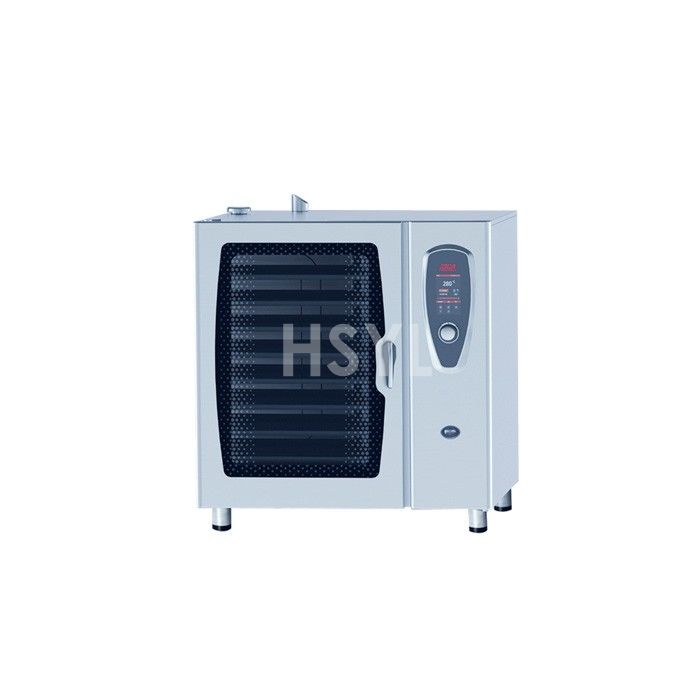
HCO10.2E Commercial Combi Oven
Review this combi-oven model for a proposed batch application. Request the pan arrangement, cooking controls and a representative bake trial before using it in a production plan.
View product detailsSend HSYL a baking production brief with product samples or specifications, required quantities by dispatch time, tray or rack details, available space and utilities. Request confirmation of whether a suitable industrial configuration can be proposed before evaluating a price.
Frequently Asked Questions
Does a higher maximum temperature mean a higher production rate?
No. Output depends on the product, usable load, full cycle and acceptable finished result. The maximum temperature alone does not show how quickly the intended product can be baked successfully.
Plan the Equipment Around Your Kitchen.
Share your menu, peak service demand, available space and site utilities. Tell us which equipment you are considering so we can review the requirements with you.