All-Electric Commercial Kitchen
Plan an all-electric commercial kitchen with menu-based equipment choices, an example load schedule, kW versus kWh calculations and a phased conversion plan.
An all-electric commercial kitchen is a coordinated equipment and utility plan, not simply a gas cookline with electric appliances substituted one by one. The useful starting point is a menu that the proposed equipment can produce, followed by a schedule showing which loads operate together. This tells you whether to retain the menu, change the production sequence or investigate a larger electrical supply.
The scope includes cooking, refrigeration, warewashing, hot water, ventilation and supporting systems. A kitchen with an electric oven but gas water heating or another combustion appliance is not fully electric within that scope.
Match each cooking process to an electric option
| Menu duty | Electric option to evaluate | What changes in the workflow |
|---|---|---|
| Pan cooking and sauce work | Compatible induction or electric hotplate equipment | Cookware, response to controls and pan movement must suit the actual appliance |
| Contact cooking on a flat surface | Electric griddle | Compare usable plate area and recovery under the intended food load |
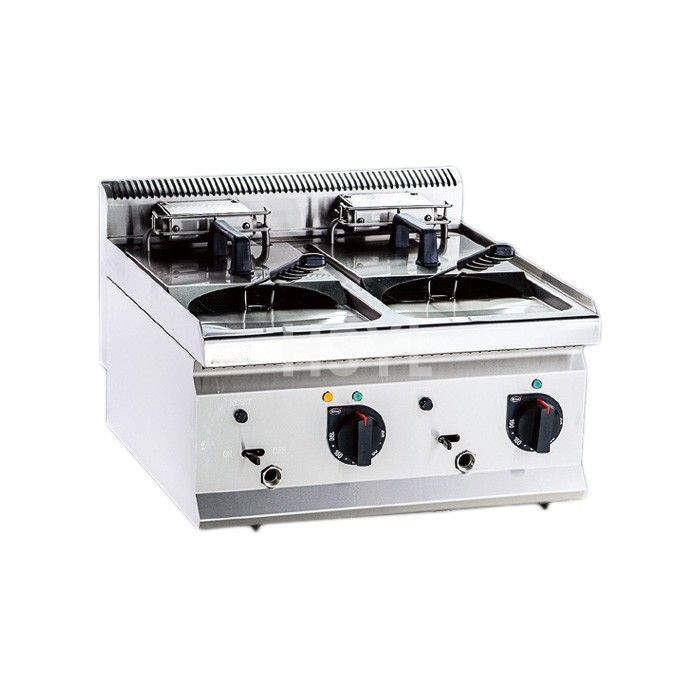
| Deep frying | Electric fryer with suitable independent vats | Include oil handling and extraction; removing gas does not remove these needs |
| Baking and mixed oven cooking | Convection or combi oven | Steam modes can add water, drainage and cleaning requirements |
| Batch steaming | Electric steamer cabinet | Coordinate loading, steam release and water services with the batch plan |
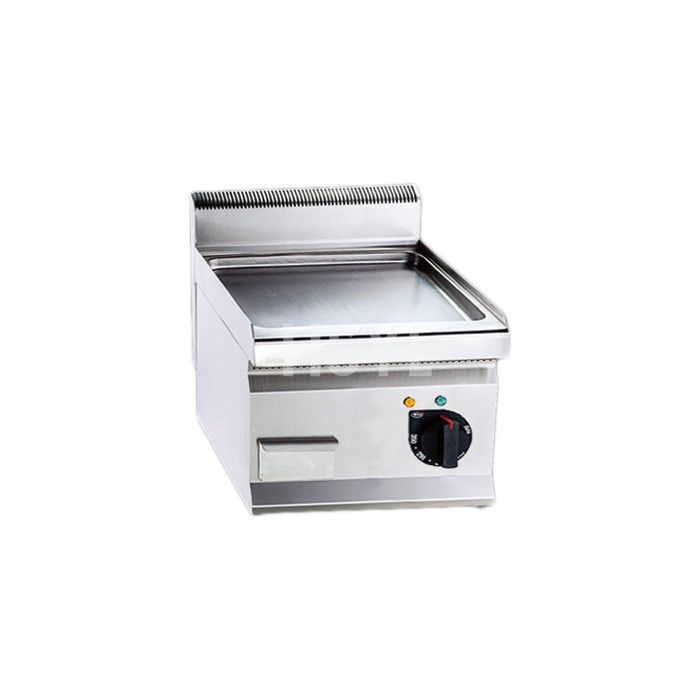
Choose an electric griddle because the menu needs contact cooking, not because its connected load happens to fit the remaining capacity. Equally, a combi oven is not automatically the best replacement for every gas appliance: its additional modes are worthwhile only if they remove a real production constraint.
Read a load schedule without confusing kW and kWh
kW describes power. kWh describes energy over time. A rated input identifies an appliance's electrical requirement, but multiplying that rating by opening hours does not establish normal daily consumption. Thermostatic cycling, preheating, idle periods, product loading and standby all affect energy use.
Write down the exact voltage, phase, frequency and rated input of each offered configuration. Appliances with a similar kW rating can require different supplies. A transformer, adapter or different plug should not be assumed to solve a mismatch.
| Equipment group | Assumed connected load | Busy cooking period | Review point |
|---|---|---|---|
| Oven | 12 kW | Operating | Preheat and recovery may overlap other work |
| Pan-cooking equipment | 5 kW | Operating | Check actual number of active cooking positions |
| Warewashing | 3 kW | Scheduled later in this example | The real kitchen may need it during service |
| Other loads included in this example | 1 kW | Operating | Real ventilation, refrigeration and hot water must be listed individually |
The assumed connected total is 21 kW. The indicated cooking period includes 18 kW of listed loads, but this is not a recommended service size or an approved demand factor. Scheduling the dishwasher later may be impractical, and omitted systems can materially change the result. An electrical designer must assess the complete schedule, starting loads, phase balance, protection and applicable requirements.
Use real model references to test the scale of the project
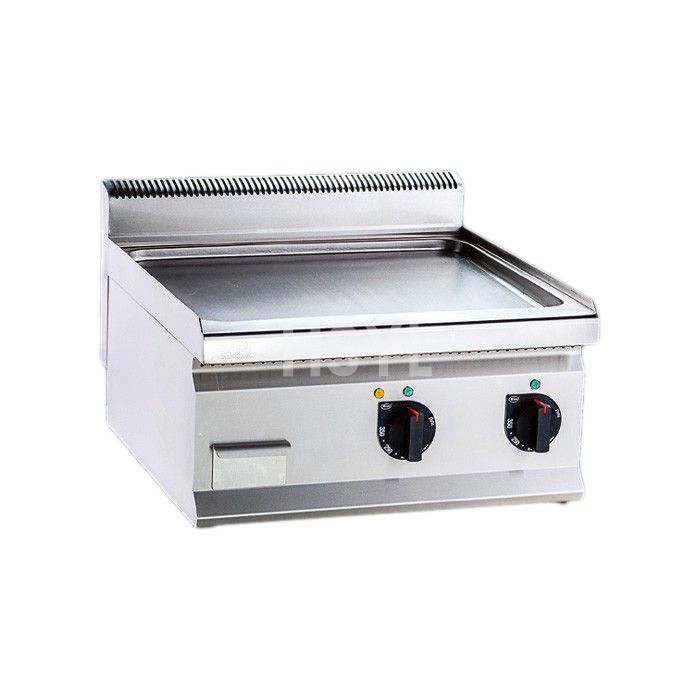
The HG countertop electric griddle range lists HG6035E at 4.2 kW and HG6060E at 8.4 kW. These catalog inputs help compare the load consequences of the two models; they are not energy-consumption measurements or portions-per-hour ratings.
The HF countertop electric fryer range uses model references HF6035E and HF6060E. The Hualing 2025.07 catalog lists 5.4 kW and 10.8 kW respectively, with a 3N~380 V reference. Confirm the current offered configuration before making a connection plan.
Using the smaller catalog griddle and fryer references together gives 4.2 + 5.4 = 9.6 kW of connected cooking input. That already excludes ovens, refrigeration, ventilation, hot water and washing. This is why a list of compact countertop appliances can still require a substantial electrical review.
Choose a conversion route that the kitchen can operate
New premises or a complete refit
Coordinate equipment selection with the building services before fixing counters and floor penetrations. Compare the installation cost of suitable alternatives while the layout can still change. Include service access and the route for replacing a failed appliance.
Replacing equipment in stages
Choose a production duty that can be tested without disrupting the whole menu. Record food quality, operator sequence, utility use and cleaning. Use those results to refine the next stage. A successful trial of one induction station does not prove that all remaining cooking duties can use the same equipment.
A site with limited electrical capacity
Compare menu simplification, production before the peak, suitable off-site preparation and a supply upgrade. Re-timing work can reduce overlap, but it must not create unsuitable holding times or an unmanageable service queue. If the required menu cannot be delivered within the site's constraints, resolve that before purchasing the cookline.
Compare operating costs using measured inputs
Compare the same food output, product starting conditions and service schedule. Include preheat, cooking and idle energy, not only an advertised efficiency percentage. An energy-certified model may provide useful standardized test data, but certification for one model cannot be transferred to another.
Illustrative energy-cost calculation: 18 kWh measured over a defined operating period at an assumed tariff of US$0.20 per kWh gives US$3.60 in energy charges. Both numbers are example inputs. This excludes demand charges, standing charges, taxes and other equipment. It is not an operating-cost claim for any model or a prediction of savings against gas.
Electric equipment to include in your shortlist
Build the shortlist by cooking process, then check the exact electric configuration and its services against the complete site load schedule.
HG Electric Griddle Range
For flat-plate cooking, compare the usable surface and the way staff share it at peak service. Confirm the selected HG electric model and input power before adding it to the connected-load schedule.
View product details
HF Electric Fryer Range
For fried menu items, check independent vats, recipe temperatures and the loaded recovery test. Use the exact HF model specification for electrical requirements rather than estimating from oil capacity.
View product details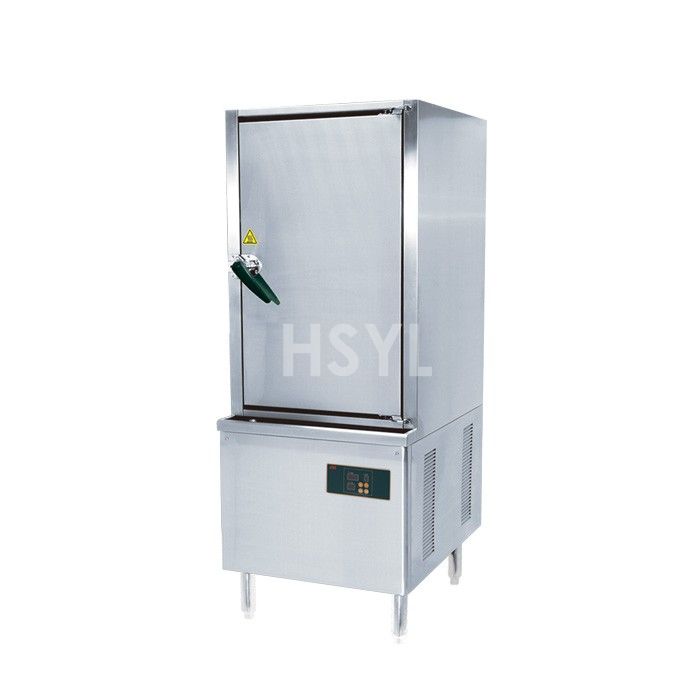
HSO Steamer Cabinet Range
For batch steaming, request the electric configuration of the HSO range. Confirm tray fit, loading, electrical supply and any water or drainage needs; this range also includes gas configurations.
View product detailsKeep ventilation, water and maintenance in the final scope
Electric cooking still produces heat, moisture and, depending on the process, grease-laden emissions. Keep extraction and make-up air in the design. An electric combi oven or steamer may also need water treatment, drainage and access for cleaning. The HSO steamer cabinet range is a starting point for comparing steaming configurations, rather than assuming that every cabinet has the same services.
Request an all-electric kitchen equipment schedule with the menu, service windows, floor plan and available electrical supply. Separate equipment prices from electrical upgrades, ventilation, water services and commissioning so that competing proposals describe the same working kitchen.
Plan the Equipment Around Your Kitchen.
Share your menu, peak service demand, available space and site utilities. Tell us which equipment you are considering so we can review the requirements with you.