Commercial Pizza Machine
Technical guide to commercial pizza machines, automated dough divider-rounders, heated pizza presses, and dough sheeters. Explains gluten preservation, hydration tolerance (55%-75%), cycle speed, and industrial crust consistency.
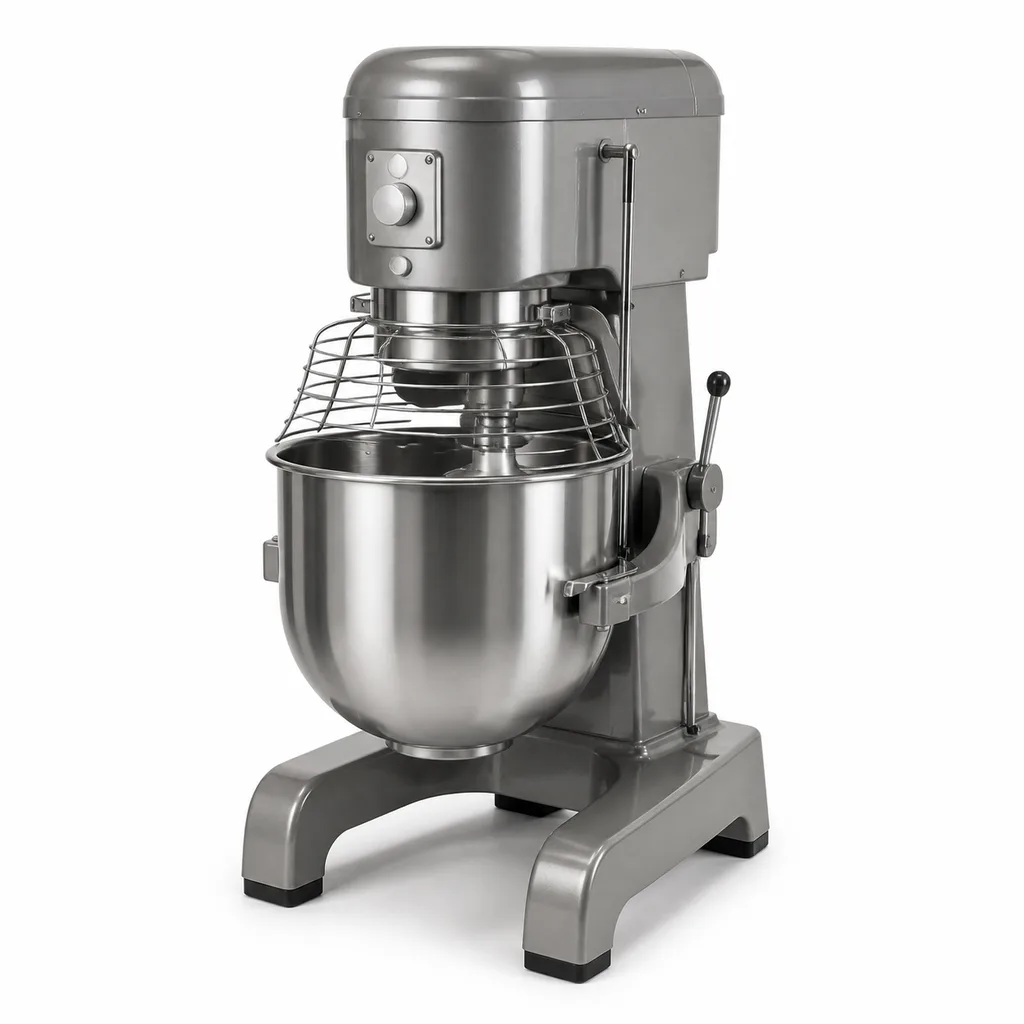
Executive Engineering Summary: Commercial Pizza Machines & Dough Processing Automation
In high-volume pizzerias, bakery commissaries, Italian fast-casual chains, and frozen pizza manufacturing facilities, dough preparation represents the most labor-intensive and quality-critical stage of production. Manual dough portioning, hand-rounding, and hand-stretching introduce severe operator fatigue, inconsistent crust thicknesses, unpredictable fermentation schedules, and erratic baking times across deck and conveyor ovens. A commercial pizza machine ecosystem—incorporating spiral dough mixers, automated volumetric divider-rounders, dual-pass roller sheeters, and heated hydraulic crust presses—transforms batch dough management into a continuous, precision-engineered manufacturing process while rigorously preserving dough rheology, gluten tensile network integrity, and cellular carbon dioxide retention.
Dough Rheology: Mechanical Shearing vs Gluten Matrix Preservation
Pizza dough is a viscoelastic non-Newtonian fluid whose structure depends on the hydration of glutenin and gliadin proteins. Excessive mechanical shear, heat friction, or improper roller geometry ruptures the delicate gluten gluten sheets, leading to collapsed gas cells, dense gum-lines under the cheese, and tough, leathery crusts. Commercial dough machinery is engineered around specific rheological operating windows:
- High-Torque Spiral Mixing: Unlike planetary mixers that exert radial tearing shear, a dual-speed fixed-bowl spiral mixer rotates the bowl while a low-shear spiral arm kneads dough with minimal friction. This limits bowl friction temperature rise to ≤0.5°C per minute of mixing, allowing dough to exit the mixer at the optimal yeast metabolism window (24°C to 26°C / 75°F to 78°F).
- Volumetric Dividing & Conical Rounding: Suction-piston dividers portion dough by volume rather than cutting blades, avoiding shear stress. The portioned dough enters a conical rounder where a Teflon-coated spiral furrow rolls the dough upward against an eccentric revolving cone. Centripetal rolling forms a tight, sealed outer gluten skin that traps CO₂ gas bubbles during cold retard proofing without tearing surface strands.
- Heated Hydraulic Pressing vs Cold Dual-Roller Sheeting:
- Heated Hydraulic Presses: Employ dual heated platens (typically 120°C to 180°C) with 3 to 6 tons of hydraulic pressure. A short 3-to-5-second press cycle flash-gelatinizes a microscopic starch barrier on the dough surface, locking in moisture and preventing sauce soggy penetration during high-speed conveyor baking.
- Two-Stage Offset Rollers (Cold Sheeters): Pass dough through two consecutive pairs of non-stick Delrin rollers positioned at 90-degree angles. The first set forms an oval dough sheet; the second widens it into a circle without applying heat, perfectly mimicking hand-stretched Neapolitan and New York style crusts with raised airy cornicione rims.
Throughput Modeling & Sizing Equations for Pizzeria Commissaries
Sizing commercial pizza machines for central commissaries or busy restaurants requires calculating continuous dough throughput, taking into account machine cycle time, operator efficiency, and proofing box capacity:
Commissary Hourly Pizza Base Production Equation
The theoretical and effective production rate of an automated dough dividing, rounding, and pressing line is expressed as:
T_hr = [3600 · Ncavities / t_cycle] · η_operator
Where:
• T_hr = Effective finished pizza crusts or dough balls produced per hour
• Ncavities = Number of simultaneous forming heads or divider pistons (1 to 4)
• t_cycle = Complete mechanical cycle time per portion (seconds, including feeding, pressing, and discharge, typically 4 to 8 seconds)
• η_operator = Ergonomic operator loading efficiency coefficient (typically 0.82 to 0.88 for manual transfer; 0.95 for inline conveyorized systems)
For example, a dual-platen heated press with t_cycle = 5.0 seconds and an operator efficiency of 85% delivers: T_hr = [3600 × 2 / 5.0] × 0.85 = 1,224 pizza crusts per hour.
Hydration Tolerance: Low-Moisture Cracker vs High-Hydration Artisan Doughs
Machine compatibility is strictly governed by dough baker's hydration percentage (water-to-flour mass ratio):
- Low-to-Medium Hydration (50% to 58% Water): Common in Chicago thin-crust, cracker-crust, and Detroit-style doughs. Highly resilient, firm doughs that require heavy hydraulic presses or cast-iron gear dough sheeters. Can handle rapid mechanical transfer without sticking to transfer chutes.
- High-Hydration Artisan Doughs (65% to 75% Water): Standard in Neapolitan, Roman Pinsa, and sourdough artisan pizzas. Sticky and highly delicate. Standard dividers will smear the dough; high-end volumetric equipment utilizes pneumatic oil-free piston injection, flour dusters, and variable-speed Teflon spiral channels to prevent mechanical adhesion.
Sanitary Construction, Food-Grade Belts & Safety Guarding
Because flour dust and wet dough create a breeding ground for mold and weevils, commercial pizza machinery must adhere to stringent hygienic design standards (CE Food Machinery Directive and NSF/ANSI Standard 8). Key structural requirements include:
- AISI 304 Stainless Steel Framing: All outer chassis panels, flour catch pans, and hopper walls fabricated from minimum 1.5mm stainless steel with smooth welds.
- Food-Contact Polyurethane & PTFE Conveyors: FDA-compliant anti-static non-stick conveyor belts resistant to oil degradation and easily unclipped for daily sanitization.
- Dual-Channel Safety Interlocks: Transparent polycarbonate safety shields over mixing bowls and roller chutes equipped with magnetic reed switches that instantly brake motor rotation within 0.2 seconds if opened.
Technical Specification Matrix: Commercial Pizza Machine Systems
| Machine Type | Model Code | Production Capacity | Portion / Size Range | Connected Power | Key Engineering Feature |
|---|---|---|---|---|---|
| Heated Dough Press | HS-PP45-HD | Up to 450 crusts/hr | 200mm to 450mm (8" - 18") | 3.5 kW (230V / 400V) | Dual heated platens, digital timer, thickness dial |
| Two-Stage Sheeter | HS-DR300-SS | Up to 600 bases/hr | 100mm to 400mm dia | 0.37 kW (230V 1-Phase) | Heavy Delrin resin rollers, oblique angle feed |
| Divider-Rounder | HS-DVR200-AU | 1800 dough balls/hr | 50g to 650g (±1.5g) | 1.8 kW (400V 3-Phase) | Oil-less volumetric piston, Teflon conical spiral |
| Spiral Dough Mixer | HS-PM80-SP | 80 kg dough / batch | 50 kg flour capacity | 4.5 kW Dual Motors | Two-speed timer, reversible bowl, safety guard |
Systematic Troubleshooting & Mechanical Diagnostic Protocol
Engineering Matrix: Dough Tearing, Hydraulic Pressure Loss & Weight Inconsistency
| Symptom / Failure | Underlying Root Cause | Diagnostic Inspection Step | Corrective & Preventative Action |
|---|---|---|---|
| Dough sticks to sheeter rollers; tearing and jamming | Flour dusting mechanism empty; dough hydration exceeds roller spec; scraper blades worn or misaligned | Inspect scraper blade edge along Delrin roller; measure dough hydration and temperature (>28°C increases stickiness) | Re-align spring-loaded scraper blades; dust dough lightly with semolina or rice flour; cool dough retarder to 22-24°C before sheeting |
| Inconsistent dough ball scaling weight (±15g variance) | Volumetric suction chamber partially filled; large air pockets in dough; suction seal ring worn | Weigh 20 consecutive dough balls on precision balance; check piston cylinder for vacuum pressure leakage | Degas dough gently before loading hopper; replace piston PTFE sealing rings; adjust compression stroke timing |
| Pizza press fails to flatten dough; springs back immediately | Platen temperature too low; dough lacks relaxation (gluten tension too high); press dwell time under 2 seconds | Check platen surface temperature with contact pyrometer; inspect dough proofing rest time after rounding | Increase platen temperature to 135-150°C; extend press dwell timer to 4-5 seconds; allow minimum 20 minutes dough bench rest |
| Hydraulic press sluggish cycle; low pressing tonnage | Hydraulic fluid level low; oil contaminated or overheated; pressure relief valve out of adjustment | Check hydraulic fluid sight glass and temperature gauge; connect pressure gauge to main cylinder line | Top up with ISO VG 46 anti-wear hydraulic oil; clean hydraulic suction strainer; reset main relief valve to 180 bar specification |
Gluten Network Rheology & Cold Retard Fermentation Dynamics
The interaction between mechanical dough processing and yeast biochemical kinetics dictates final crust texture. When dough balls are portioned and rounded, mechanical energy temporarily strains and disrupts the gluten disulfide bonds, increasing dough elasticity and resistance to extension. If freshly rounded dough is pressed or sheeted immediately, the high internal tension causes rapid elastic snap-back, tearing crust edges and producing thick, dense centers. Industrial pizzeria operations enforce a mandatory proofing recovery window: portioned dough balls must rest in food-grade polypropylene proofing boxes at 18°C to 20°C for 20 to 30 minutes, or enter a cold retard chiller (2°C to 4°C) for 24 to 72 hours. Cold retarding allows proteolytic enzymes to gently relax gluten strands while yeast produces complex organic acids, esters, and carbon dioxide micro-bubbles that expand into an airy, crispy crust structure during oven baking.
Flour Dust Explosion Prevention & ATEX-Compliant Commissary Engineering
In high-volume central pizza bakeries operating continuous spiral mixers and automatic flour dusting systems on dough sheeters, airborne flour dust represents an acute deflagration and respiratory hazard (organic dust explosion class St 1, Kst value 50-150 bar·m/s). Machinery engineering must incorporate enclosed dust-tight flour hoppers with pneumatic transfer valves, negative-pressure dust extraction collars above mixing bowls, and IP65 washdown-rated electrical enclosures. Motor drives and push-button stations must meet ATEX Zone 22 safety standards to prevent electrical arc ignition of combustible starch suspensions. Daily dry cleaning protocols must mandate HEPA-filtered industrial anti-static vacuums rather than compressed air blowers, preventing the creation of explosive airborne dust clouds.
Featured Commercial Equipment Models
HS-PP45 Heavy-Duty Heated Hydraulic Pizza Dough Press
High-throughput heated platen press producing uniform 200mm to 450mm pizza bases in 4 seconds without degassing yeast cell structure. Features digital timer and thickness dial.
View Pizza Machinery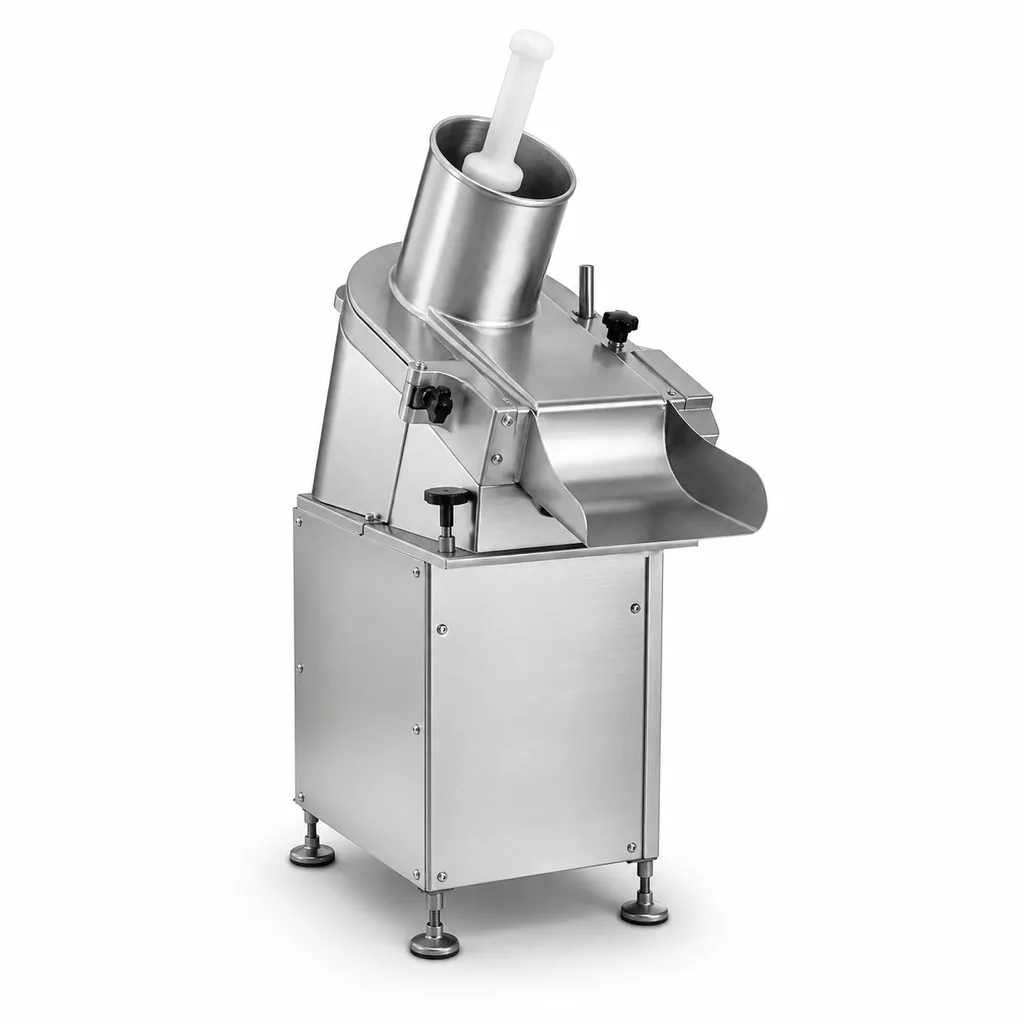
HS-DR300 Two-Stage Stainless Dough Sheeter & Roller
Heavy-duty dual oblique food-grade resin roller system designed for high-hydration artisan pizza doughs (up to 70%). Delivers flawless circular crusts with natural raised rims.
View Pizza Machinery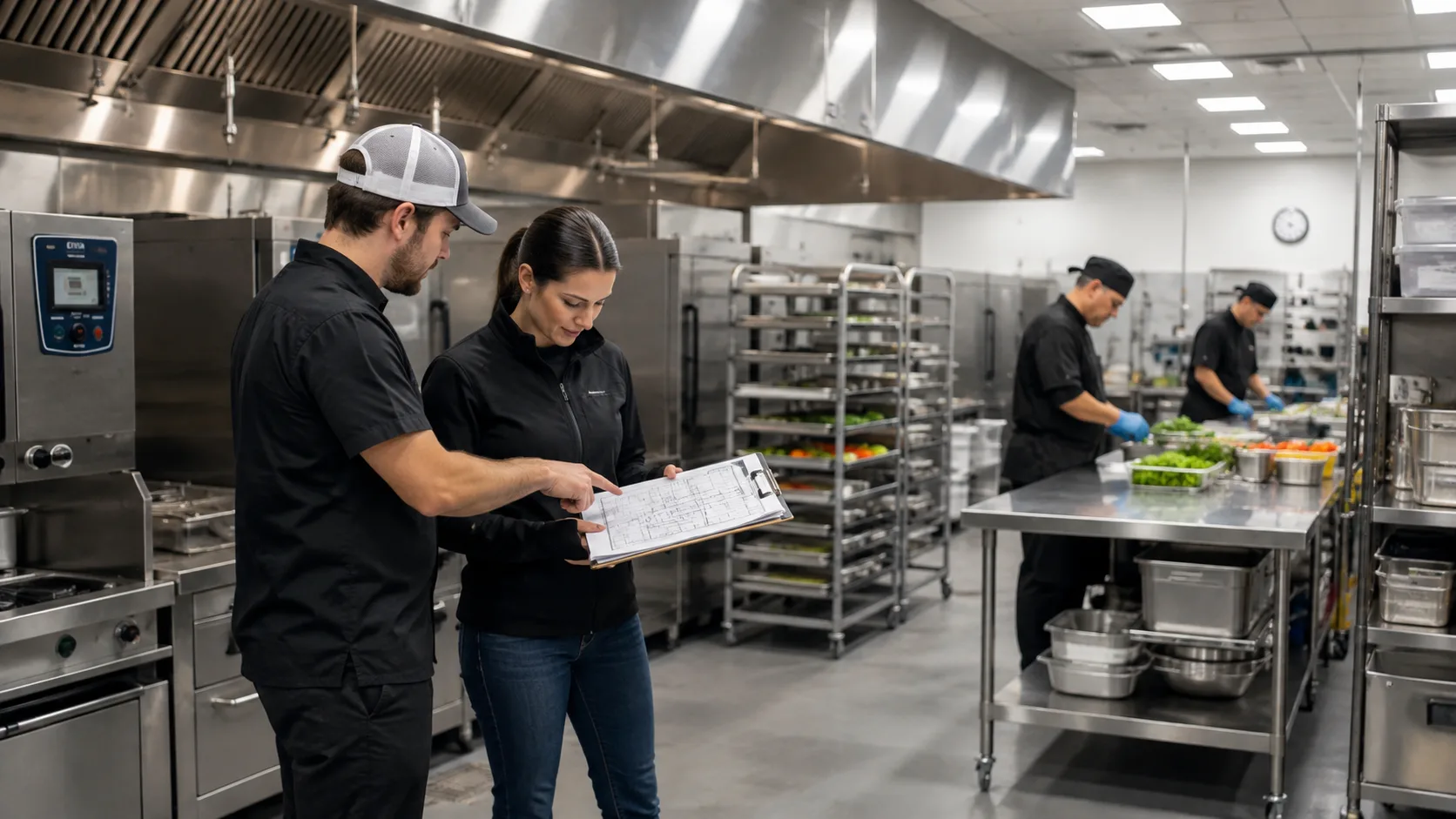
HS-DVR200 Automated Dough Divider & Conical Rounder
Continuous volumetric piston divider paired with a spiral conical Teflon-coated rounder. Scales 50g to 650g dough balls with ±1.5g precision at 1,800 pieces per hour.
View Pizza Machinery
HS-PM80 Industrial Fixed-Bowl Spiral Pizza Mixer
High-torque dual motor spiral mixer with heavy-duty safety grid, programmable two-speed timer, and reverse bowl rotation for optimal gluten development in cold-fermented doughs.
View Pizza MachineryTurnkey Engineering Solutions & Applications
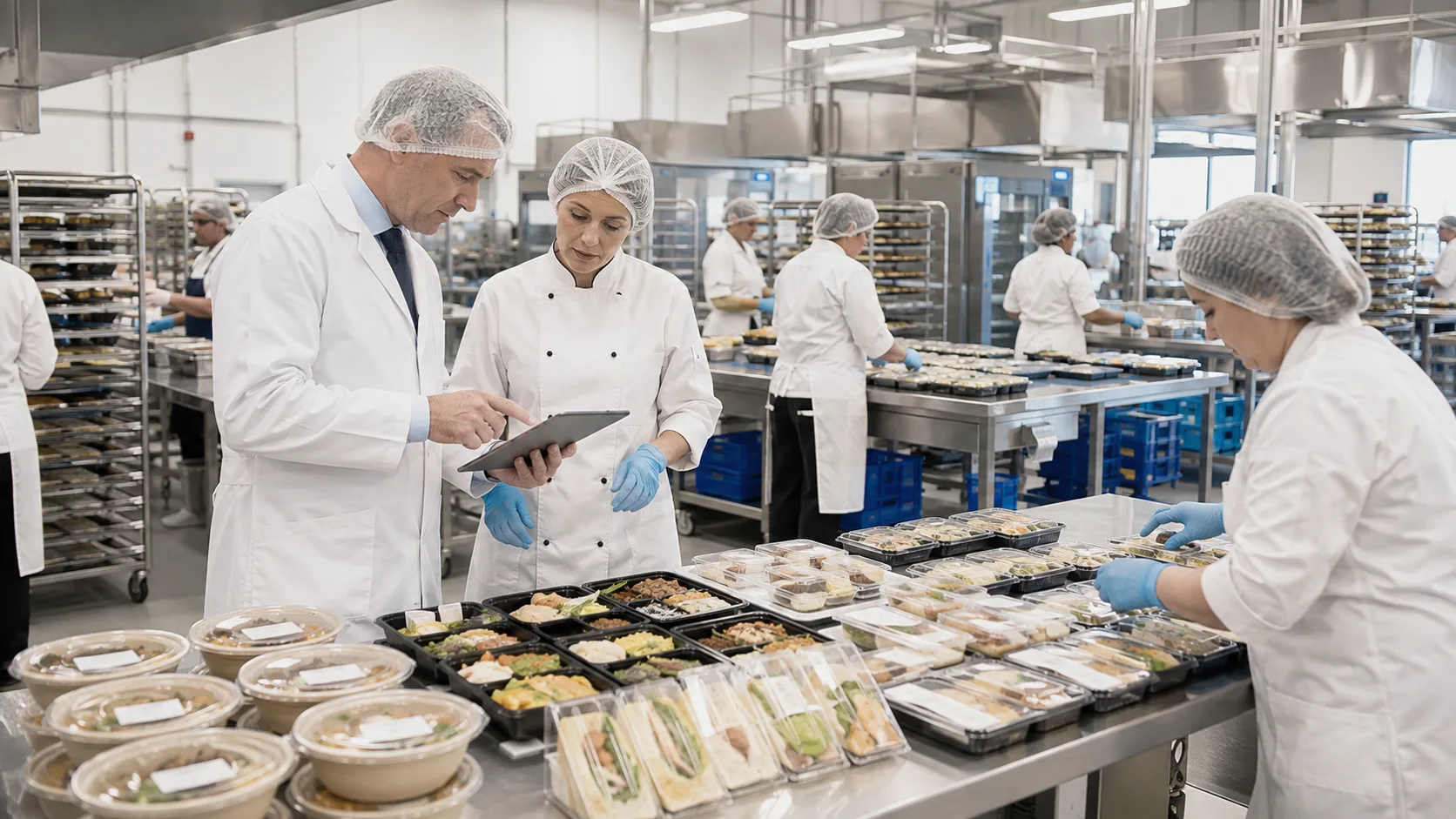
Multi-Unit Artisan Pizzeria Commissary Production Facility
Installed automated spiral mixing and volumetric divider-rounding systems processing 1,200 kg of cold-fermented Neapolitan dough daily across 12 delivery hub branches.
Explore Central Kitchen
Frozen Pizza Food Processing Plant Crust Automated Line
Engineered high-speed heated hydraulic crust presses with automated inline docking rollers and continuous conveyor transfer into cryogenic blast freezing tunnels.
Explore Central Kitchen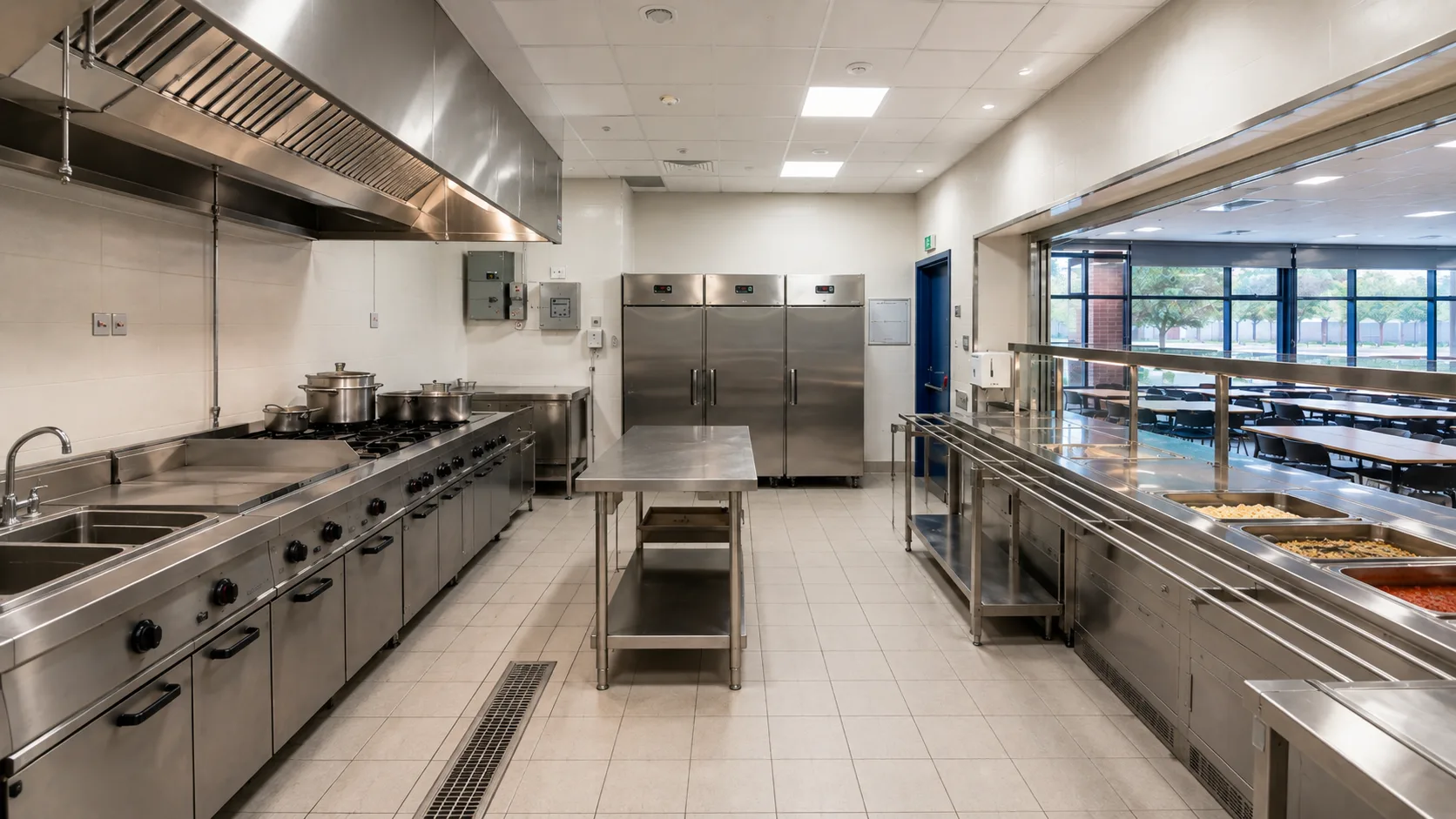
High-Volume University Campus Pizzeria Dining Hall
Streamlined peak lunch rush by outfitting 3 dual-roller dough sheeters and heated presses, enabling student staff to stretch and dock 350 fresh 12-inch pizza crusts per hour.
Explore School Solutions
Cruise Liner Central Bakery & Italian Specialty Bistro
Equipped maritime kitchen with compact heavy-duty marine-grade stainless dough dividers, shock-resistant conical rounders, and safety interlocked dough rollers.
Explore Central KitchenProcurement & Commissioning Sizing Checklist
- Assess Peak Dough Ball Output Requirements: Match divider-rounder output (e.g. 1,200 to 2,000 balls/hr) to proofing box storage and cold fermentation retarding capacities.
- Verify Electrical Phase & High-Torque Wiring: Confirm availability of 400V 3-phase power for heavy spiral mixers and industrial volumetric divider hydraulic pumps.
- Select Forming Method Compatible with Crust Character: Choose two-stage cold rollers for open, airy, irregular artisan rims; select heated hydraulic presses for rapid, uniform, dock-sealed commercial thin crusts.
- Inspect Emergency Interlocks and Operator Guarding: Ensure machinery features CE/NSF-certified safety cages, emergency stop push-buttons, and magnetic interlocks halting moving parts within 200 milliseconds.
- Establish Daily Dry Cleaning & Belt Sanitation SOPs: Implement dry brush scraping protocols and wipe-downs; avoid direct pressure hose-downs on precision gearboxes and digital platen sensors.
Frequently Asked Questions
How does a commercial dough divider-rounder improve pizzeria operations?
A commercial divider-rounder automates the labor-intensive task of portioning bulk mixed dough into exact weight balls and rolling them into sealed round spheres. It can process 1,200 to 1,800 dough balls per hour with scaling precision within ±1.5g, eliminating manual scaling errors, preventing dough drying, and ensuring uniform crust thickness and baking consistency.
What is the difference between a heated pizza press and a dough sheeter roller?
A dough sheeter passes cold dough through two sets of adjustable rollers to roll the dough out into a circular base without applying heat, preserving open, airy, irregular bubbles characteristic of artisan and Neapolitan crusts. A heated hydraulic press flattens the dough ball between heated platens (120°C-150°C) in 3-5 seconds, creating a sealed, uniform crust with micro-gelatinized surface starch that speeds up baking and prevents soggy sauce absorption.
Can high-hydration doughs (above 65%) be processed through commercial pizza machines?
Standard mechanical dividers and rollers may stick and tear high-hydration doughs. For doughs with 65% to 75% hydration (such as Roman Pinsa or artisan sourdough), facilities should select volumetric dividers with pneumatic flour-dusters, non-stick Teflon-coated spiral rounding cones, and food-grade Delrin rollers to ensure gentle handling without degreasing or gluten rupture.
How does spiral dough mixing differ from planetary mixing for pizza dough?
Spiral mixers rotate both the dough bowl and a fixed-position spiral hook. This gentle kneading action minimizes friction heat rise (≤0.5°C per minute) and avoids radial shear, allowing the gluten network to fully develop without overheating the yeast. Planetary mixers, by contrast, apply high-shear orbital motion that can easily over-mix and heat delicate dough batches.
What daily sanitation is required for commercial pizza dough sheeters and dividers?
Pizza dough equipment should never be pressure-washed or hosed down with water, as moisture penetrates gearboxes and digital platen sensors. Instead, perform dry scraping with plastic spatulas to remove dried dough, vacuum away excess flour dust, and wipe food-contact rollers and belts with damp sanitizing cloths before drying thoroughly.
Plan the Equipment Around Your Kitchen.
Share your menu, peak service demand, available space and site utilities. Tell us which equipment you are considering so we can review the requirements with you.