Commercial Heat Lamp
Engineering guide to commercial kitchen heat lamps, infrared strip warmers, heated holding cabinets, and soup kettles. Evaluates radiant heat flux (W/m²), vapor humidity control, HACCP temperature thresholds (>63C), and food texture preservation.
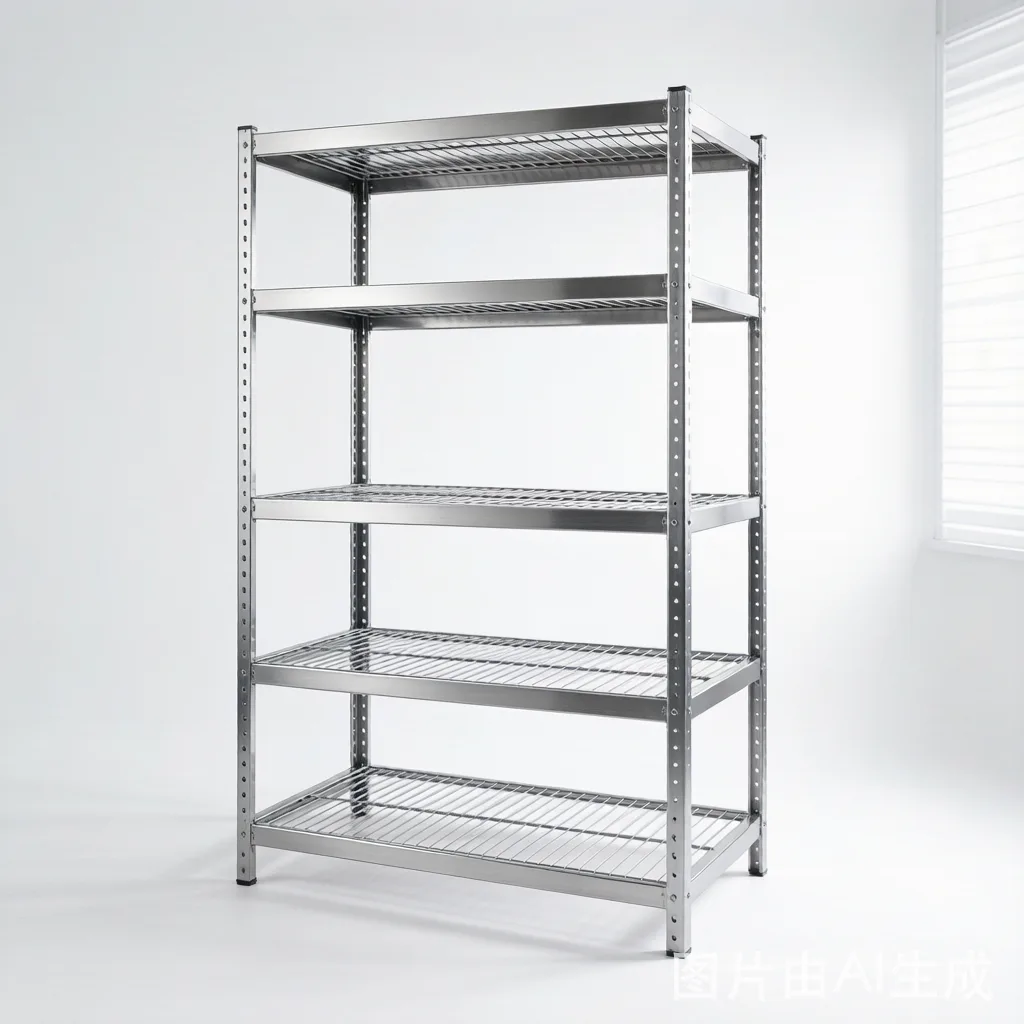
Executive Engineering Summary: Commercial Heat Lamps & Food Holding Equipment
In modern commercial catering, banqueting facilities, hospital dietary kitchens, and high-volume restaurant pass-throughs, the period between culinary cooking completion and consumer table service represents the most hazardous phase for food quality and microbiological safety. Commercial heat lamps, infrared overhead strip warmers, heated holding cabinets, and bain-marie warming tables serve as the critical temperature-holding bridge. Equipment engineering must deliver exact thermal radiation flux, maintain strict HACCP microbiological hot-holding thresholds (strictly ≥63°C / 145°F in UK/EU, ≥60°C / 140°F in the US), prevent moisture evaporation and protein desiccation, and minimize energy waste across extended service shifts.
Radiant Heat Transfer Physics: Stefan-Boltzmann Infrared Mechanics
Overhead heat lamps and strip warmers transfer thermal energy predominantly via electromagnetic infrared radiation rather than air convection. Infrared energy travels unimpeded through ambient air until striking food surfaces, where it is absorbed and converted into sensible heat.
Stefan-Boltzmann Radiant Heat Transfer Equation
The net radiant heat transfer rate between an overhead infrared heating element and the plated food surface below is expressed as:
q = ε · σ · A · (T_emitter⁴ - T_food⁴)
Where:
• q = Net heat transfer rate (Watts, W)
• ε = Emissivity factor of the food surface (typically 0.85 to 0.95 for cooked meats and moist starch)
• σ = Stefan-Boltzmann constant (5.6703 × 10⁻⁸ W/m²·K⁴)
• A = Target surface exposure area (m²)
• T_emitter = Absolute surface temperature of the infrared heating element (Kelvin, K)
• T_food = Absolute temperature of the food surface (Kelvin, K)
Because radiative flux scales with the fourth power of absolute emitter temperature, mounting height directly dictates radiant intensity. Governed by the inverse-square law, doubling the vertical distance between the heat lamp and the plate reduces heat flux to 25%, making precision height adjustment essential.
Emitter Technologies: Quartz Halogen vs Metal Sheath vs Ceramic Infrared
Selecting food warming lamps and strip heaters requires matching the infrared wavelength spectrum to the food holding profile:
- Quartz Halogen / Incandescent Infrared Bulbs: Emit short-wave to medium-wave infrared (wavelength 1.2 to 2.5 microns) along with visible light. Provides instant thermal response (under 2 seconds from switch-on) and visual illumination of plated food on expeditor passes. However, quartz bulbs are sensitive to thermal shock and oil residue, requiring shatterproof Teflon coatings to prevent glass contamination in compliant kitchens.
- Extruded Aluminum Metal-Sheathed Tubular Strips: Utilize heavy-duty Incoloy tubular resistance elements embedded inside continuous parabolic aluminum reflectors. Emits medium-to-long wave infrared (3.0 to 6.0 microns) producing a uniform, wide-angle heat pattern ideal for long pass shelves (1200mm to 2400mm). Highly robust with lifespan exceeding 10,000 hours and immune to moisture or grease splash damage.
- Ceramic Radiant Emitters: Emit long-wave infrared (3.0 to 10.0 microns) with zero visible light glare. Delivers deep, gentle penetrating heat that keeps thick proteins and starch warm without scorching delicate garnishes or continuing the cooking process.
Dual-Temperature Moist Holding vs Dry Radiant Holding
The primary technical failure in hot holding is food desiccation—where radiant heat drives off internal moisture, turning sauces into crusts and hardening fried textures:
- Dry Radiant Holding (Pass-Through Heat Strips & Lamps): Engineered for short holding durations (≤15 to 20 minutes) for plated entrees, fried items, and roasted meats awaiting expeditor dispatch. Maintains crisp exterior crusts (e.g., french fries, fried chicken) by keeping ambient relative humidity low while holding surface temperature above 65°C.
- Controlled Vapor Convection Holding Cabinets: Engineered for extended bulk holding (1 to 4 hours) of banquet roasts, braised dishes, and delicate vegetables. These insulated cabinets incorporate precision PID digital thermostats paired with water reservoir vapor generators. Maintaining 85% to 92% relative humidity inside the cabinet equalizes vapor pressure between the food and surrounding air, completely preventing moisture evaporation and preserving food mass yields.
- Wet-Well Bain-Marie Counters: Indirect steam/hot water jacket heating for commercial soup equipment, sauces, and gravies. Direct conductive heat transfer from the 85°C water bath prevents bottom scorching and crust formation common in direct-fired dry wells.
HACCP Critical Control Points (CCP) & Bacterial Growth Prevention
Food safety legislation (FDA Food Code, UK Food Hygiene Regulations) defines the "Danger Zone" as 5°C to 60°C (41°F to 140°F), within which foodborne pathogens such as Clostridium perfringens, Bacillus cereus, and Salmonella replicate exponentially. Commercial holding equipment must maintain internal core food temperatures at a constant minimum threshold of 63°C (≥60°C in US jurisdiction) across all food pans. Holding units must incorporate external calibrated digital temperature displays, high-temperature audio-visual limit alarms, and smooth internal coved corners compliant with NSF Standard 4.
Technical Specification Matrix: Professional Heat Holding Equipment
| Equipment Type | Model Code | Holding Capacity | Connected Power | Thermal Technology & Wavelength | Target Application |
|---|---|---|---|---|---|
| Pass-Through Heat Lamp | HS-HL3-QZ | 3 Standard Plated Entrees | 750W (3 × 250W) 230V | Shatterproof Quartz Infrared Bulbs | Chef pass expeditor counter, pickup station |
| Overhead Strip Warmer | HS-SW180-AL | 1800mm Continuous Pass | 1750W (230V 1-Phase) | Tubular Incoloy with Parabolic Reflector | Kitchen pass shelf, carving station, buffet |
| Mobile Banquet Cabinet | HS-HC16-GN | 16 × GN 2/1 or 32 × GN 1/1 | 2.2 kW (230V 1-Phase) | Forced Convection + Vapor Moisture Pan | Banquet plating, institutional hospital delivery |
| Wet-Well Bain Marie | HS-BM120-WT | 4 × GN 1/1 Deep Wells (150mm) | 3.0 kW (230V / 400V) | Immersed Stainless Electric Elements | Soup, sauce, and vegetable cafeteria service |
Systematic Troubleshooting & Temperature Diagnostic Matrix
Engineering Matrix: Food Temperature Drops, Desiccation & Component Failures
| Symptom / Failure | Underlying Root Cause | Diagnostic Inspection Step | Corrective & Preventative Action |
|---|---|---|---|
| Core food temperature drops below 60°C on pass counter | Mounting height too high above plates; ambient kitchen air drafts cooling surface; element wattage undersized | Verify core temperature using calibrated penetration needle probe; measure distance from bulb to plate surface | Lower heat lamp fixture to 350-400mm above plate level; install draft deflectors; upgrade from 250W to 375W infrared emitters |
| Food surface dries out and forms tough leather skin | Holding under dry infrared heat exceeds 20 minutes; excessive surface radiant heat flux; zero humidity retention | Log time elapsed between plating and pickup; measure surface temperature (>80°C indicates scorching) | Transfer items to controlled humidity holding cabinet for holdings >20 minutes; adjust strip warmer infinite control dial down |
| Frequent bulb burnout / socket discoloration | Thermal cycling vibration; ceramic socket contact oxidized; skin oils on bulb quartz envelope caused hotspot failure | Inspect ceramic porcelain socket for carbon tracking or loose spring tabs; check voltage supply | Clean and tighten porcelain socket contacts; handle replacement quartz lamps exclusively with clean lint-free cloth or gloves |
| Bain-marie water well fails to heat / slow pre-heat | Thick limescale encrustation on submerged elements; thermal cut-out tripped from dry-boil operation | Inspect heating elements for white calcium mineral buildup; test continuity across high-limit safety thermostat | Descale water basin with food-grade sulfamic or citric acid; reset manual high-limit thermostat; mandate water refill before turning power ON |
Water Hardness Chemistry & Limescale Mitigation in Wet Bain-Maries
In commercial catering and buffet operations, wet-well bain-marie food warmers are exceptionally vulnerable to water hardness. Tap water containing high concentrations of dissolved calcium and magnesium carbonates (total water hardness >120 ppm CaCO₃) rapidly precipitates limescale onto the surface of submerged electric heating elements. Limescale acts as an extreme thermal insulator (thermal conductivity k ≈ 0.5 to 1.3 W/m·K compared to k ≈ 15 W/m·K for stainless steel). A 2mm limescale build-up elevates internal element sheath temperatures above 600°C, precipitating premature element burnout and increasing electrical energy consumption by 18% to 24%. Facilities must supply bain-marie wells through reverse osmosis (RO) or weak-acid cation exchange water treatment, paired with automated monthly deliming cycles using food-grade sulfamic or citric acid to maintain high heat-transfer efficiency.
Multi-Stage Electronic Temperature Logging & HACCP Automated Telemetry
Manual temperature logging using handheld dial thermometers is prone to human error and falsification during peak service hours, exposing commercial hospitality operations to foodborne illness liability and regulatory fines. Modern commercial food holding cabinets and pass-through heat stations integrate automated IoT temperature monitoring systems. Calibrated RTD probes positioned at top, middle, and bottom shelf tiers continuously log food holding temperatures at 60-second intervals into an onboard non-volatile memory buffer. If any shelf temperature drops below the legal HACCP hot-holding threshold (63°C in UK/EU, 60°C in US) for more than 15 consecutive minutes, an audible alarm sounds and an immediate SMS/email alert is dispatched to the executive chef, ensuring immediate corrective culinary action before food safety is compromised.
Featured Commercial Equipment Models
HS-HL3 Ceramic Infrared Commercial Pass-Through Heat Lamp
3-bulb hanging or freestanding overhead pass-through heat lamp with shatterproof infrared quartz emitters. Maintains 65°C core plate temperature without drying out sauces.
View Food Holding Systems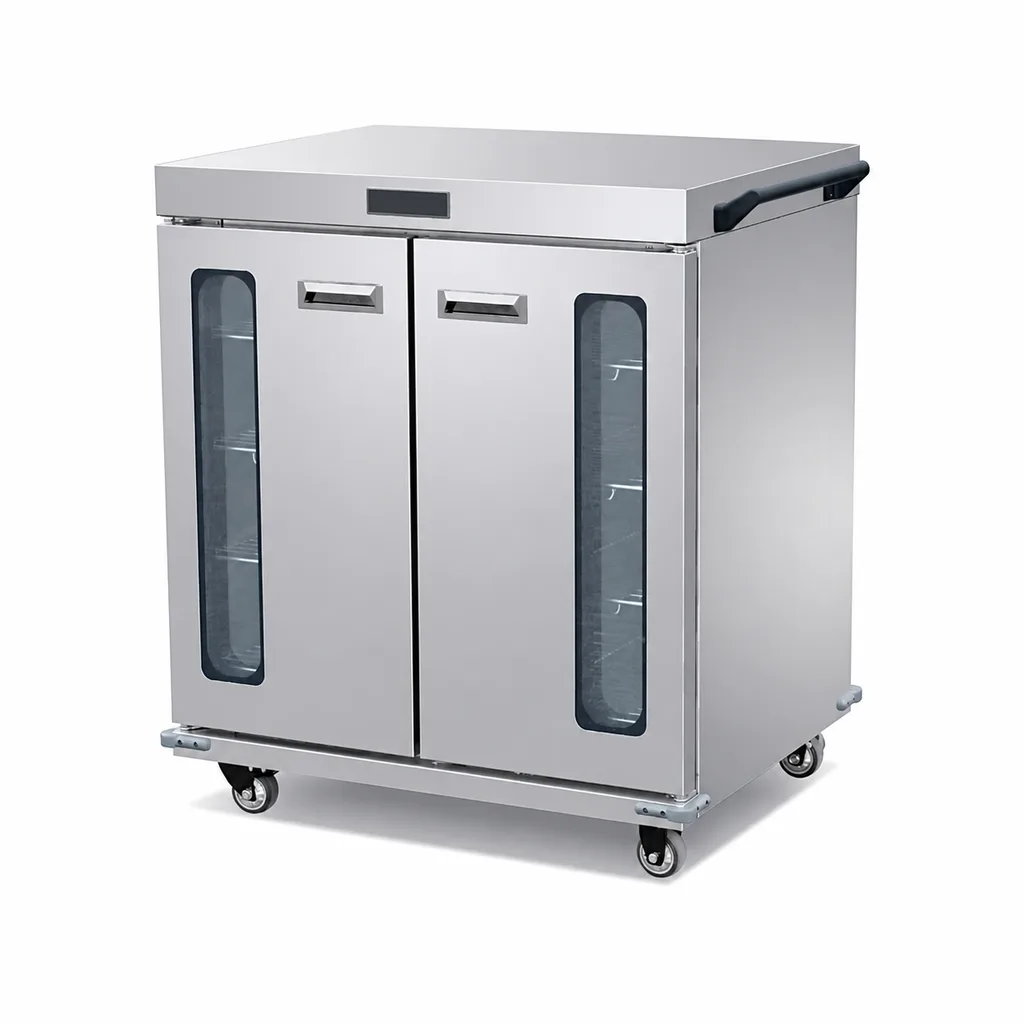
HS-SW180 Heavy-Duty Commercial Overhead Strip Warmer
Continuous extruded aluminum radiant heat strip with angle reflectors and infinite temperature control switch. Delivers uniform heat pattern across full 1800mm pass shelf.
View Food Holding Systems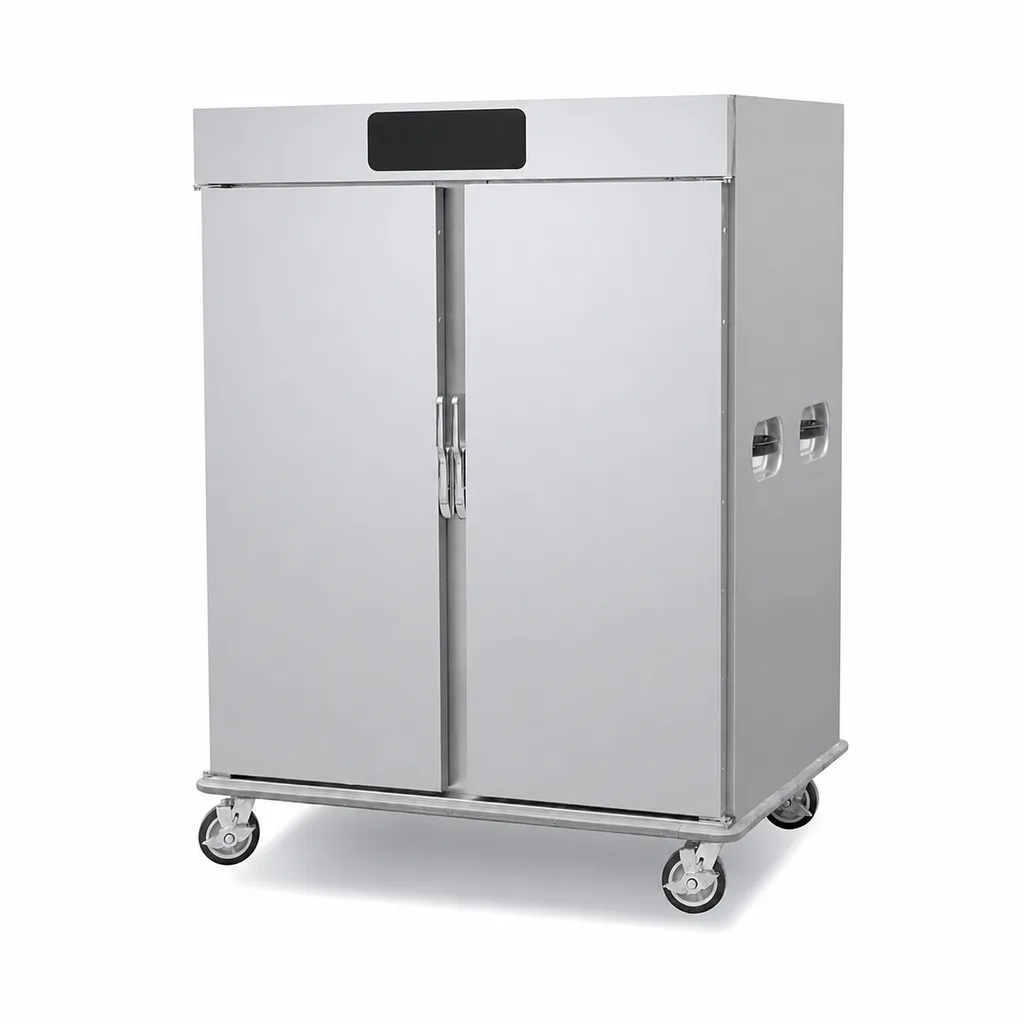
HS-HC16 Mobile Insulated Banquet Heated Holding Cabinet
16-pan GN 2/1 forced-air heated cabinet with digital PID temperature regulation (up to 88°C), passive water trough for crust protection, and perimeter bumper guards.
View Food Holding Systems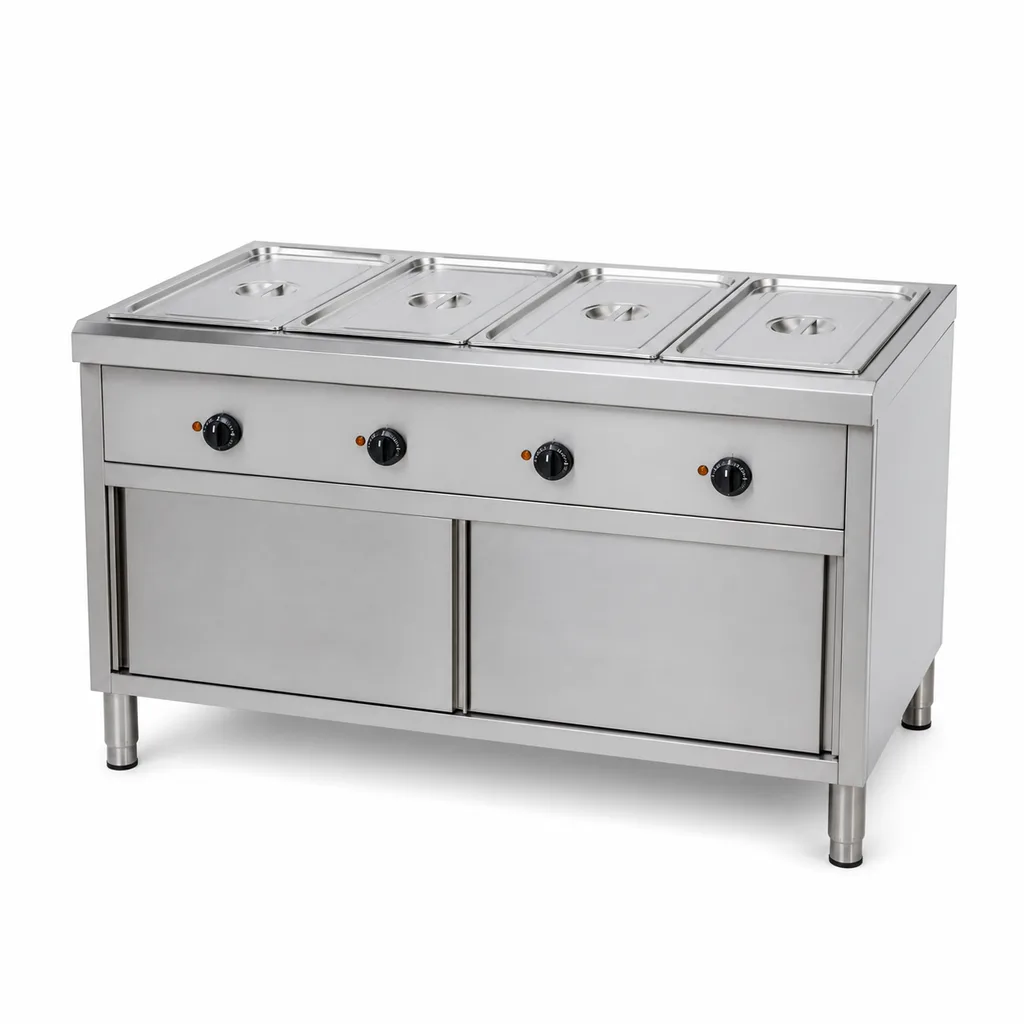
HS-BM120 4-Well Wet Well Commercial Bain Marie Counter
Direct immersion electric heated buffet table accommodating 4 GN 1/1 containers. Equipped with precision thermostatic dials, drainage ball valve, and glass sneeze guard.
View Food Holding SystemsTurnkey Engineering Solutions & Applications
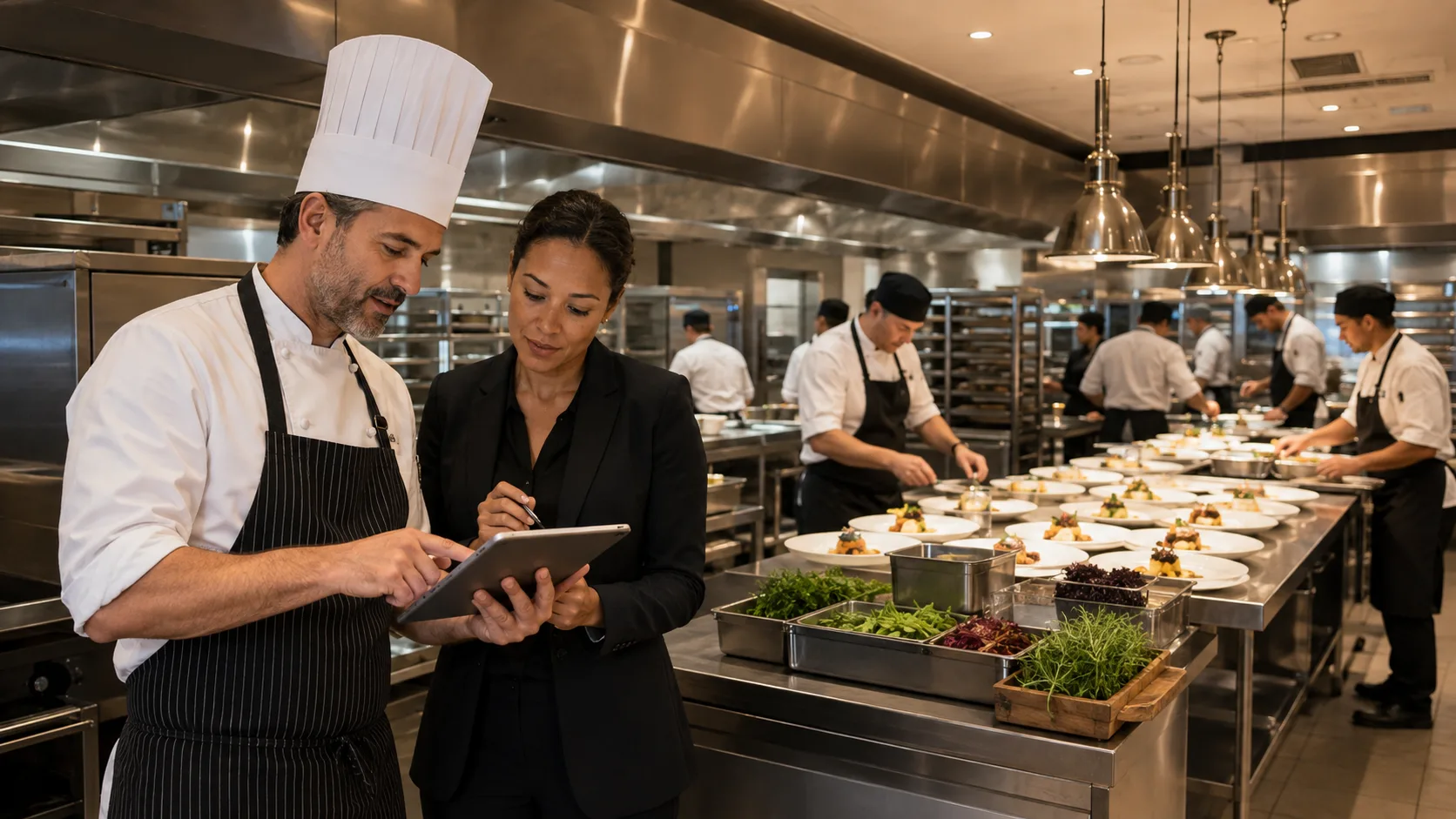
International Convention Center 3,000-Cover Banquet Operations
Deployed 28 insulated mobile banquet warming cabinets with precision humidity control, holding plated prime ribs and poultry strictly at 66°C for 90 minutes without loss of moisture.
Explore Hotel Solutions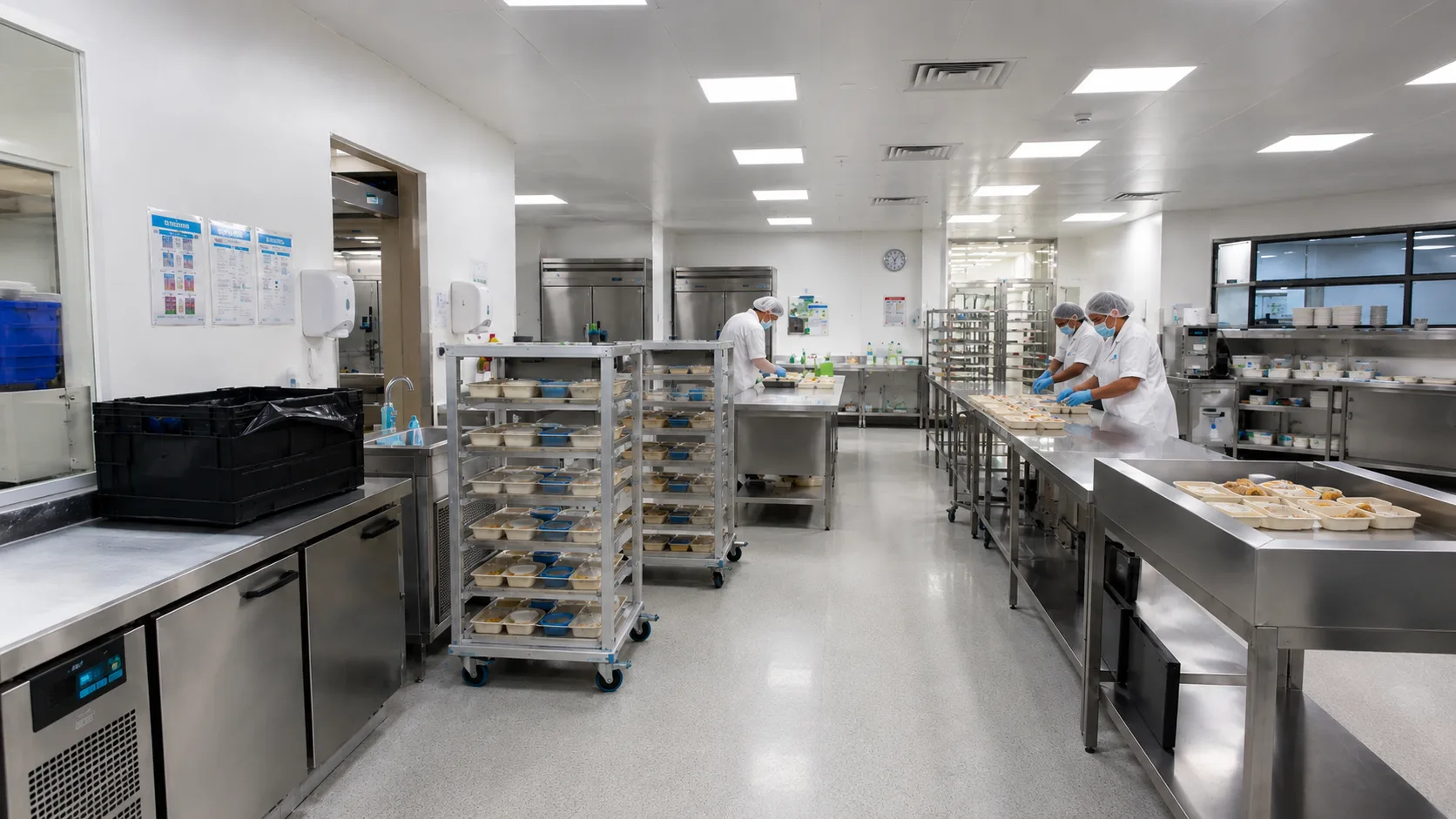
Hospital Clinical Inpatient Hot Meal Delivery System
Engineered thermal meal tray trolleys and pass-through infrared heating stations ensuring 100% compliance with healthcare dietary temperature standards across 18 ward floors.
Explore Hospital Solutions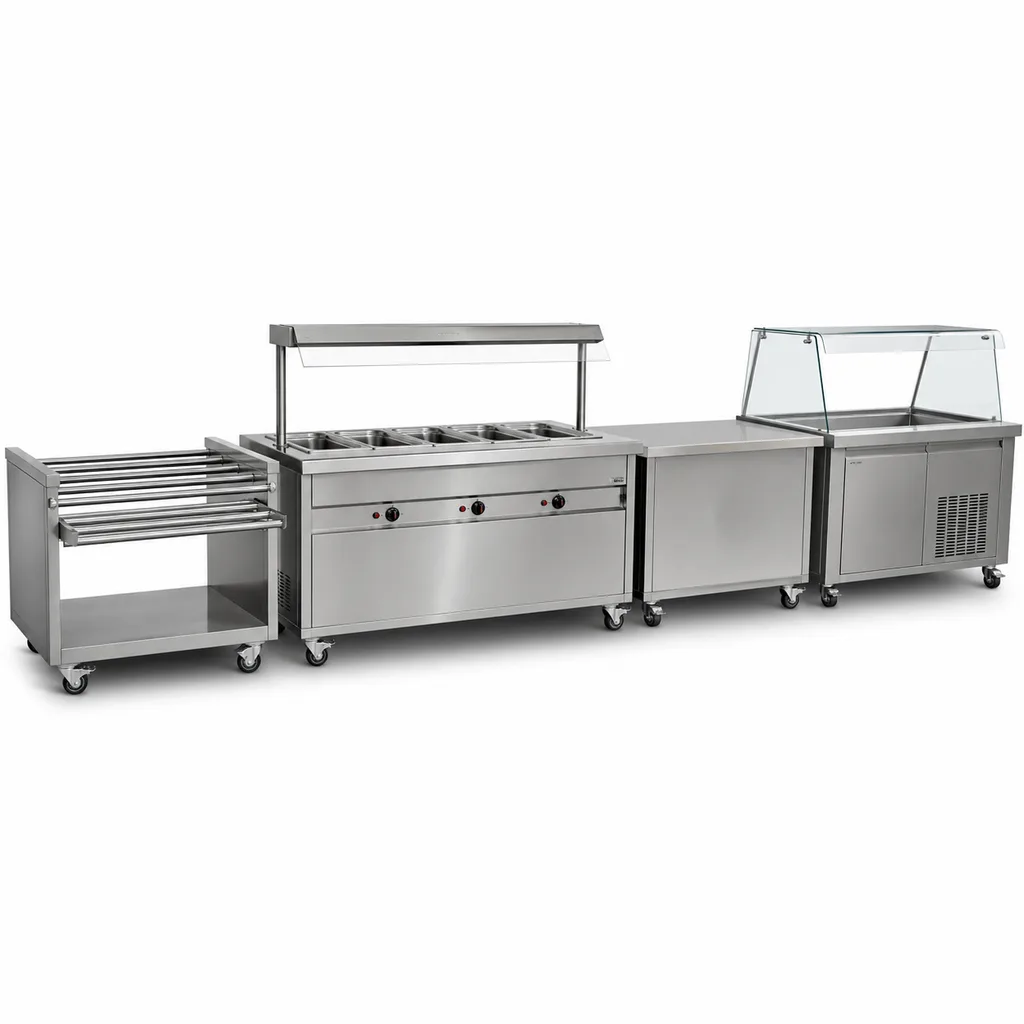
High-Volume University Dining Hall Buffet Service Line
Configured 16 modular drop-in wet/dry bain-maries with sneeze guards and overhead infrared heat lamps, serving 4,500 students daily with consistent food safety holding.
Explore School Solutions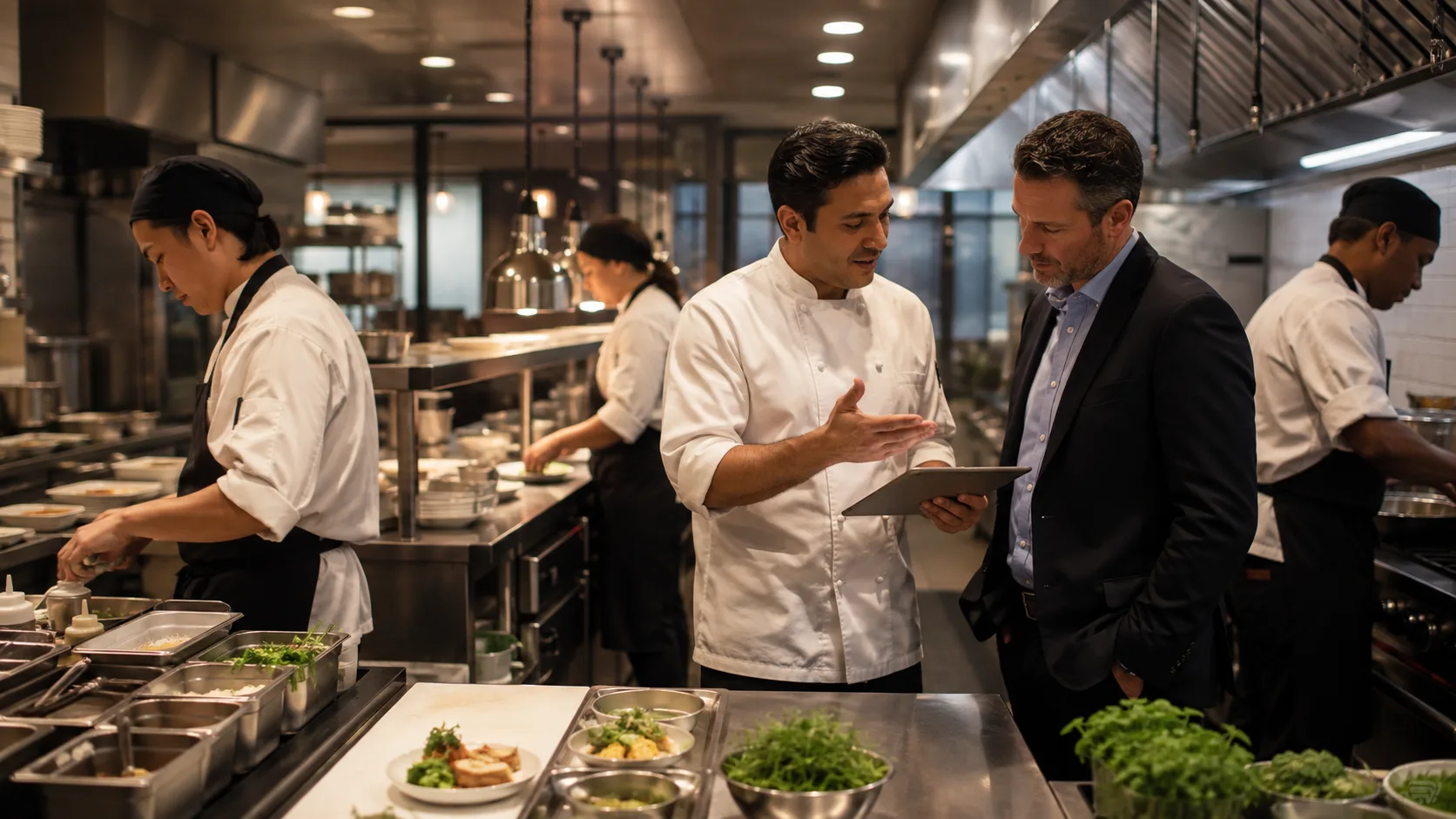
Fine Dining Restaurant Expeditor Pass-Through Station
Fitted custom matte-black architectural heat strips with dual dimming circuits over the chef expeditor pass, keeping garnished plates warm while protecting delicate microgreens.
Explore Restaurant SolutionsProcurement & Food Safety Sizing Checklist
- Verify Temperature Holding Window by Service Flow: Specify dry radiant heat strips for short-duration holding (≤15 minutes); mandate humidified convection cabinets for holding periods exceeding 20 minutes.
- Audit Pass Shelf Length vs Thermal Element Coverage: Ensure radiant heat strip length equals or exceeds shelf length (e.g. 1800mm shelf requires 1800mm warmer) to eliminate cold end zones.
- Mandate Shatterproof Teflon Bulb Shielding: In open food display and pass areas, demand shatterproof quartz bulb coatings or protective wire grilles to comply with HACCP glass policies.
- Verify Circuit Breaker Ampacity for Banquet Warmers: Multiple 2.2 kW mobile warming cabinets deployed in banquet corridors require dedicated 16A/20A power drops to avoid nuisance breaker trips.
- Check Sanitation Cleanability & Limescale Defense: Select wet-well bain maries with front-accessible quarter-turn brass drain valves and seamless deep-drawn stainless wells.
Frequently Asked Questions
How does an infrared commercial heat lamp keep food warm without cooking it?
Infrared heat lamps emit electromagnetic radiation in the infrared spectrum that is directly absorbed by the surface of plated food, converting into thermal energy. Because heat lamps warm the food directly rather than heating the surrounding air, they maintain surface temperatures above the HACCP safety threshold (≥63°C / 145°F) without continuing the internal cooking process or burning garnishes.
What is the optimal mounting height for commercial overhead heat lamps above the pass?
The standard mounting height for 250W to 375W infrared quartz or ceramic heat lamps is between 350mm and 450mm (14 to 18 inches) above the countertop surface. Due to the inverse-square law, mounting lamps too high drastically reduces thermal radiant flux, allowing food to drop below safety temperatures, while mounting too low can scorch food surfaces.
When should a kitchen use a heated holding cabinet instead of an overhead heat lamp?
Overhead heat lamps are designed for short-term holding (10 to 20 minutes) of plated entrees and fried foods awaiting server pickup. For holding bulk food longer than 20 minutes, an insulated heated holding cabinet with precision humidity and temperature control must be used to prevent moisture evaporation, texture degradation, and flavor loss.
What is the required hot holding temperature under HACCP food safety regulations?
HACCP food safety regulations mandate that hot food must be maintained at an internal core temperature of at least 63°C (145°F) in the UK and European Union, and at least 60°C (140°F) in the United States. Holding equipment must keep food consistently above this threshold to prevent rapid bacterial proliferation within the 5°C to 60°C Danger Zone.
How do wet-well bain-marie food warmers prevent food from scorching?
Wet-well bain-maries utilize an indirect water bath heated by submerged electric elements. The water transfers heat gently to the stainless food inserts (Gastronorm pans) at a maximum temperature of 100°C (typically regulated at 80°C to 85°C). This gentle, even heat prevents bottom hot-spots, eliminating the scorching and crusting common in direct-heat dry warmers.
Plan the Equipment Around Your Kitchen.
Share your menu, peak service demand, available space and site utilities. Tell us which equipment you are considering so we can review the requirements with you.