Commercial Oven for Cafe
Choose a cafe oven around scratch baking, bake-off and hot orders. Compare tray capacity, morning-service conflicts, useful controls and the complete station.
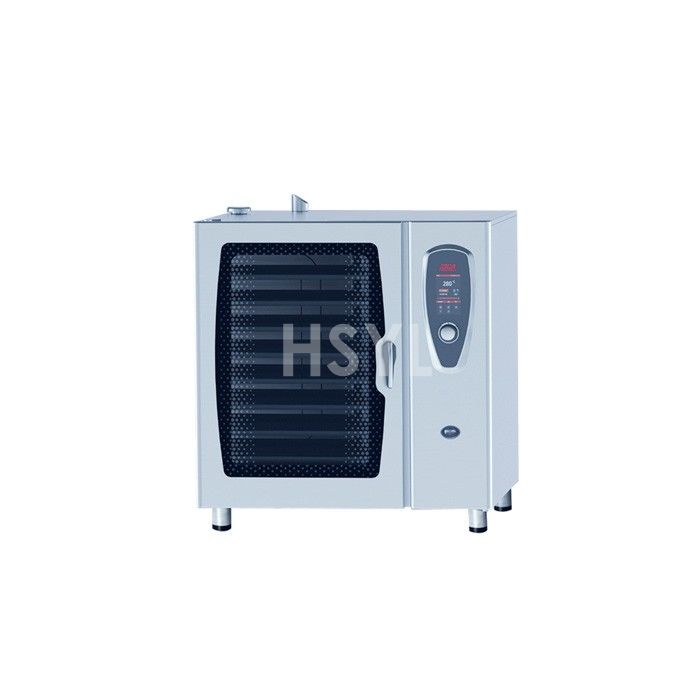
For a cafe mainly baking trays of pastries, start by comparing suitable convection ovens. For a mixed menu that genuinely needs steam and dry heat, compare a combi oven. For individually finished hot sandwiches, compare the order cycle of an appropriate finishing oven. The right commercial oven for a cafe depends on when food must be ready, not just how many items are sold in a day.
The strongest choice often removes a conflict in the service schedule: breakfast pastries need batch capacity, while lunch orders need access at unpredictable times. One large oven may still struggle if it has to switch repeatedly between incompatible products and settings.
Separate baking, bake-off and order finishing
| What the cafe does | Priorities | Costs or work easily overlooked |
|---|---|---|
| Makes products from raw dough or batter | Loaded baking consistency, tray format and controllable process | Preparation, recipe development, proofing where needed, cooling and tray washing |
| Bakes supplied frozen or part-baked products | Compatibility with the product supplier's process and repeated batch performance | Frozen storage, any required thawing or proofing, replenishment and waste |
| Heats or finishes prepared items to order | Complete order time, usable cavity and operator steps | Queues, packaging and switching between products |
| Produces both pastries and a mixed hot menu | Enough independent cooking capacity or a workable schedule | Extra modes and cleaning may add work without solving simultaneous demand |
Frozen products are not all ready to bake directly from frozen. The supplier's process determines whether preparation or proofing is needed. Use those exact products when testing an oven instead of substituting easier demonstration food.
Map the morning before choosing the tray count
Illustrative cafe schedule: an opening display needs 48 pastries. A trial loading arrangement holds 12 pastries per tray with the spacing the recipe needs. Four usable trays would accommodate the opening quantity in one batch, provided a loaded test confirms acceptable results. Four rack positions alone do not establish that performance.
| Period | Demand | Equipment decision |
|---|---|---|
| Before opening | 48 pastries for the first display | Compare demonstrated batch loading and available preparation time |
| Breakfast | Small pastry replenishments plus hot orders | Check whether both can share a program and timing; otherwise provide separate capacity or change the menu |
| Lunch | Individual sandwiches and light meals | Compare complete order cycles rather than empty chamber size |
| Quiet period | Cleaning and preparation for the next peak | Protect time and access for these tasks |
The example identifies conflicts; it does not prescribe production times or predict demand. A second smaller finishing appliance may be more useful than a larger shared baking chamber when one duty continually interrupts another. Conversely, a tightly focused pastry menu may gain little from equipment intended for individual hot orders.
Compare usable trays and the work around them
Confirm the exact tray format and spacing between loaded products. A nominal chamber or rack count cannot tell you whether your trays fit or whether all positions can be used with tall products. Test the loading you intend to operate, including the trays themselves and their surface finish.
Cooling is part of the production requirement. If the oven can finish a batch before there is space to cool and display the previous batch, the problem has moved out of the oven. Provide a landing surface and rack arrangement that keep hot trays out of the beverage and collection routes.
Do not select counter height and depth from the oven casing alone. Include the door, handles, connections, specified ventilation space and the operator holding a loaded tray.
Pay for controls and modes that solve a real problem
- Saved programs: useful when staff repeatedly run a validated recipe; they do not correct inconsistent ingredient loading.
- Airflow adjustment: worth comparing when different products respond differently to the same fan conditions; availability is model-specific.
- Humidity or steam: useful for processes that require it; it can add water-related installation and maintenance.
- Independent cooking: valuable when simultaneous menu duties cannot share settings or timing.
- Cleaning access: affects daily work even when two ovens produce similar food.
A simple oven matched to a narrow menu can be a better operational choice than a multi-function unit whose additional modes are rarely used. If the menu changes frequently, flexibility can have value, but test the actual range of dishes before assigning that value.
Where the HSYL product range fits the comparison
For a menu that needs combination cooking, review the CK-HCO-2A combi oven as a specific model enquiry. Compare the exact chamber, tray arrangement and modes with your menu; this guide does not establish a pastry capacity or recommend it as the best oven for every cafe.
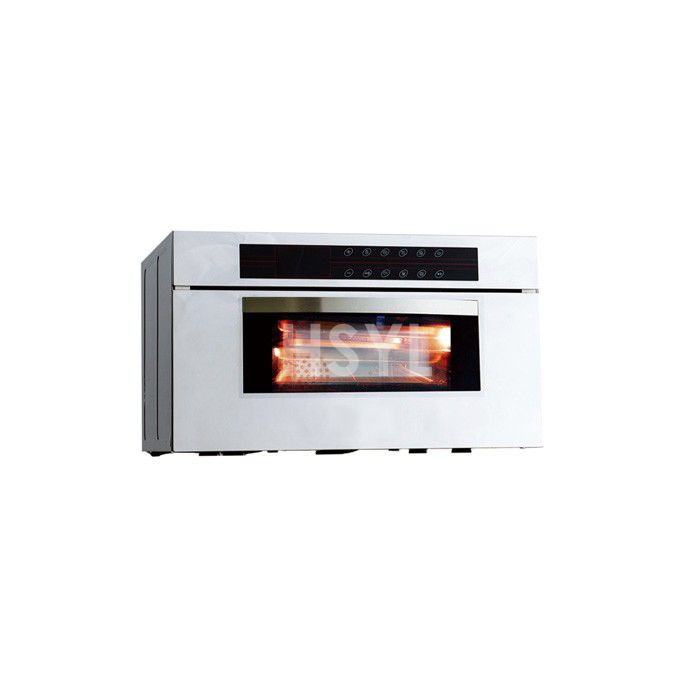
The cafe and bar kitchen overview considers the surrounding beverage, storage and washing stations. For cold assembly alongside baking, compare the ECUR salad preparation fridge range as a separate task rather than sacrificing required cold preparation space to a larger oven.
Build an oven and cold-preparation shortlist
Compare the oven with the work around it: opening batches, hot orders, chilled assembly and replenishment. The right combination should resolve the cafe service conflict you identified.
CK-HCO-2A Combi Oven
Compare the CK-HCO-2A format for the menu tasks assigned to the oven. Test usable trays and changeovers with the products you sell, including supplied bake-off items where relevant.
View product detailsHCO10.2E Combi Oven
Compare the HCO10.2E format when the schedule calls for more concurrent tray positions. Use a loaded morning-service trial rather than treating nominal rack capacity as saleable output.
View product details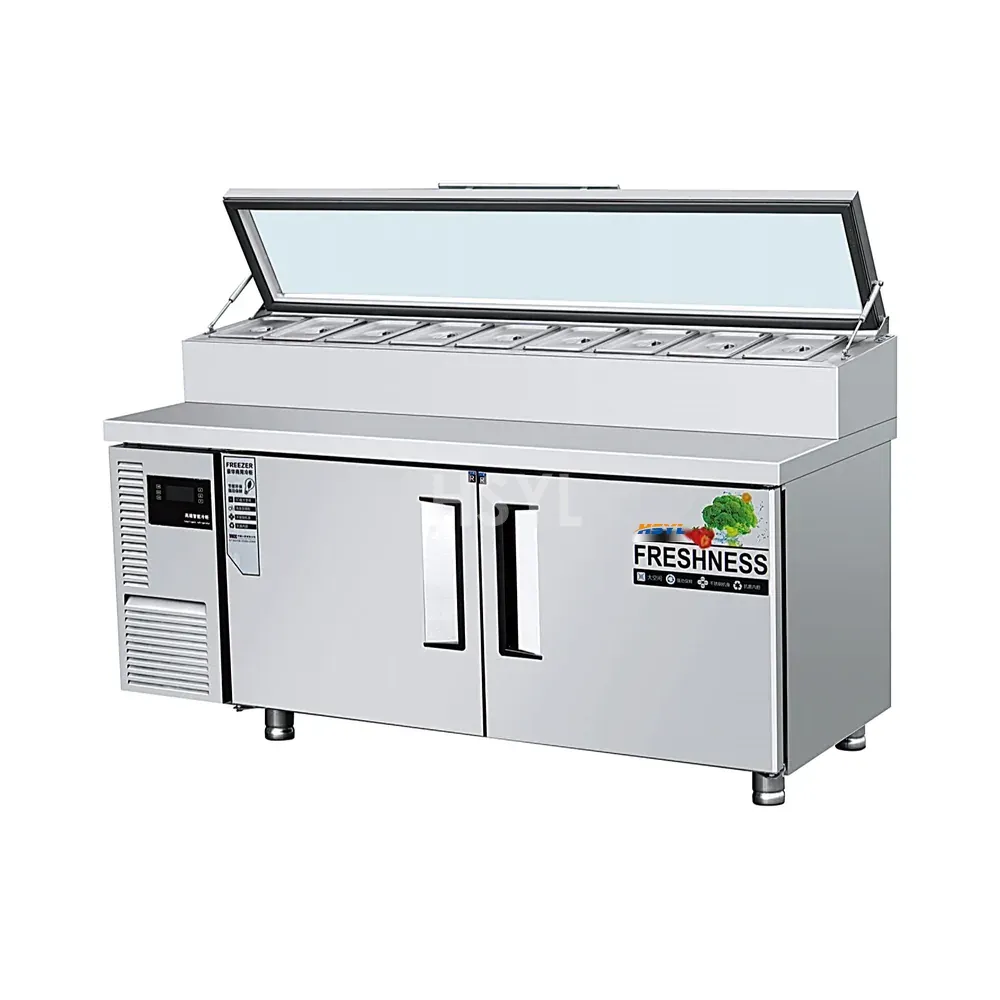
ECUR/EDTR Salad Preparation Fridges
Keep chilled sandwich or salad preparation alongside the oven plan. Check ingredient access, preparation space and replenishment so that extra oven space does not displace a necessary cold station.
View product detailsDecide using a morning-service trial
Run the opening batch, a replenishment batch and representative hot orders. Use normal staff and count the acceptable products actually ready for sale. Record rejected items, operator interventions, door openings, tray movements and cleaning work. Compare total installed cost: appliance, stand, trays, utilities, ventilation and any water treatment.
Request a cafe oven comparison with your production model, supplied or homemade products, tray format and busiest schedule. A useful proposal should explain which service conflict the oven resolves and what supporting equipment the cafe still needs.
Frequently Asked Questions
Can one cafe oven handle morning pastries and made-to-order hot food?
It can if the required modes, temperatures and timing are compatible and the service trial works. Write the morning batch schedule beside the expected hot-order arrivals. If an individual order repeatedly interrupts a full pastry batch, compare separate finishing capacity or a revised menu rather than simply choosing a larger shared oven.
How many trays should I specify for the opening bake?
Use actual product spacing and the oven's usable tray size. An illustrative requirement of 48 pastries at 12 pastries per tray needs four tray loads, but not necessarily four simultaneous rack positions. Check whether sequential batches meet opening time and whether the cooling area can receive them. Confirm the loaded result before buying.
Is a combi oven necessary for a cafe that mainly sells pastries?
Not automatically. It becomes a stronger candidate when the wider menu uses its steam or combination functions. For a narrow pastry menu, compare a suitable convection oven and the baking results first. Extra modes only add value if the team will use them and the services, cleaning and training fit the cafe.
Can I reuse my existing trays in a new oven?
Check the complete tray dimensions, depth, edge shape, rack support and spacing requirements. Similar outside dimensions do not guarantee that the tray sits securely or allows the intended airflow. Bring a sample tray and the normal product loading to the trial, and include any required new trays in the quotation.
Plan the Equipment Around Your Kitchen.
Share your menu, peak service demand, available space and site utilities. Tell us which equipment you are considering so we can review the requirements with you.