Commercial Cooking Stove
Choose a commercial cooking stove around simultaneous pans, cooking tasks and site services. Check burner layout, oven duty and the exact quoted configuration.
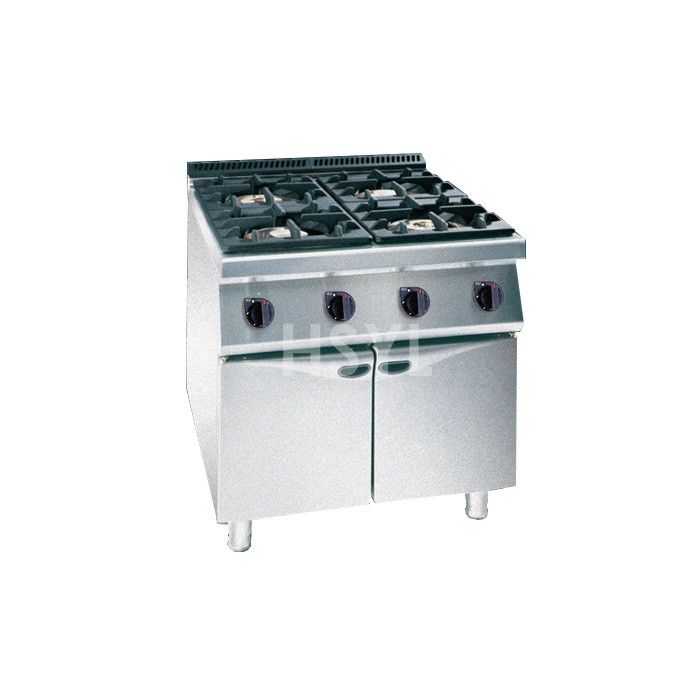
The right commercial cooking stove accommodates the pans you need at the same time and gives each cooking task suitable control. Begin with a busy service snapshot. Counting burners or choosing the highest total gas input does not show whether the cook can boil, simmer and sauté together without pans obstructing each other.
Map one demanding service interval
Write down the vessels that remain on the stove during the busiest period, including pots holding a simmer while other dishes are started. Record the outer diameter, handles, loaded weight and required task. Use the largest actual pan where it determines fit.
| Task | What to record | Layout check |
|---|---|---|
| Boiling or heating a stockpot | Pan diameter, loaded weight and starting load. | Support, handle clearance and access without reaching across another active pan. |
| Holding a simmer | Recipe requirement and time occupying the position. | Control at the required low duty; the position remains unavailable for another task. |
| Repeated sauté orders | Pan size, number of simultaneous orders and handling pattern. | Space to lift and move pans without colliding with neighbouring cookware. |
| Oven work beneath the top | Tray format, load and cooking schedule. | Door access and whether oven loading conflicts with the operator at the stove. |
Place pan outlines on a dimensioned layout of the offered top. A burner is only a usable position if the intended cookware can sit and move there safely under the manufacturer's instructions.
Read configuration rows as complete equipment descriptions
The CK-BZGL-01 product reference lists several configurations under one product code. Two rows illustrate why the configuration matters:
| Published row | Net size | Gas input | Additional electrical listing |
|---|---|---|---|
| Config 2 | 800 × 700 × 920 mm | 24 kW | Not specified in that row |
| Config 4 | 800 × 700 × 920 mm | 24 kW | 8 kW; 380V/50Hz |
These rows have the same listed footprint but different electrical information. Obtain the exact burner arrangement, oven configuration and connection schedule for the selected row. Do not divide total gas input by an assumed burner count to invent individual burner ratings.
An empty electrical field also does not prove that no electrical connection is required. Have the complete offered build confirmed.
Decide whether the oven belongs in the same unit
An oven under the stove can make use of the cookline footprint, but the tray format, cooking controls and timing must suit the menu. Compare those requirements separately from the top. If the oven door is frequently opened during intense stovetop work, review staff movement and access before choosing the combined arrangement.
For a kitchen that needs only top cooking, ask about a suitable top-only configuration and support arrangement. Do not buy oven capacity solely because it appears beneath the burners in a photograph.
Close the site questions before final selection
Provide the actual gas type and available supply information, plus electrical details for any powered components. Ask for the model-specific pressure, connection and installation requirements. Gas types or electrical versions cannot be assumed interchangeable.
Review extraction, surrounding surfaces, required clearances and service access with the responsible installer using the selected unit's documents. Include room for cleaning around and beneath the equipment in the layout. The cabinet dimensions alone are not an installation drawing.
Make the demonstration match your cooking work
If cooking performance is decisive, demonstrate the actual pan and load with the required simultaneous tasks. Observe pan stability, access, control and the finished result. A single small pan demonstration does not establish performance with several large vessels in use.
Related Products
Compare the exact offered configurations against the same simultaneous-pan map; similar product photographs do not establish identical burners, ovens or services.
CK-BZGL-01 Gas Range Reference
Use the CK-BZGL-01 reference to discuss the top layout and selected configuration row. Check pan access and individual burner information on the final drawing.
View product details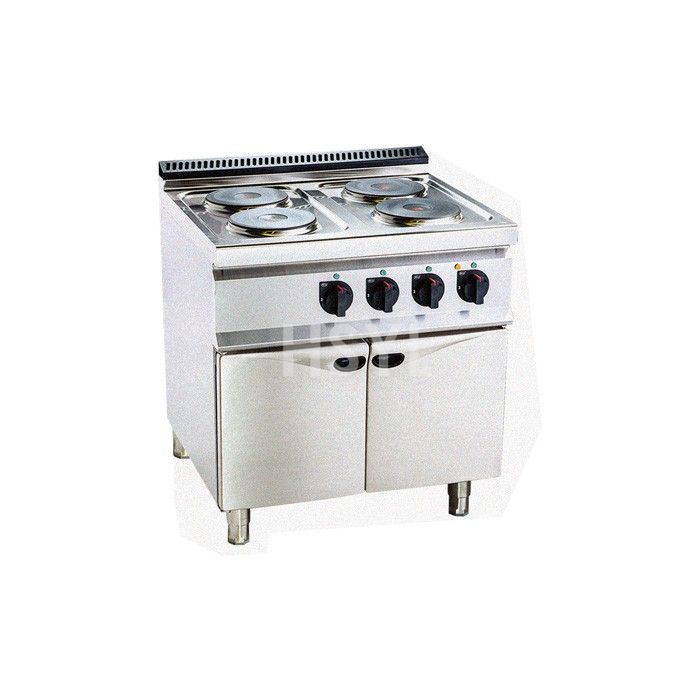
CK-BZGL-03 Commercial Range with Oven
Compare this range-with-oven reference when oven duty belongs on the same cookline. Confirm the oven arrangement, tray requirements and services independently of the stovetop.
View product detailsSend HSYL your simultaneous-pan list and cookline sketch. Request a proposed top layout and an itemised configuration showing the oven, supports and services included.
Frequently Asked Questions
Does a higher total gas input guarantee faster cooking?
No. The usable result depends on burner design, pan match, load and operating conditions. Compare the intended cooking task, not total input alone.
Can the stove be converted to a different gas after delivery?
Do not assume conversion is available or permitted. State the site gas in the enquiry and obtain the approved configuration and any conversion procedure from the supplier before ordering.
Plan the Equipment Around Your Kitchen.
Share your menu, peak service demand, available space and site utilities. Tell us which equipment you are considering so we can review the requirements with you.