Commercial Refrigerator for a Food Truck
Compare refrigerator formats and three ECUR cabinet sizes for a food truck. Check stock containers, aisle space, power stages and mobile installation suitability.
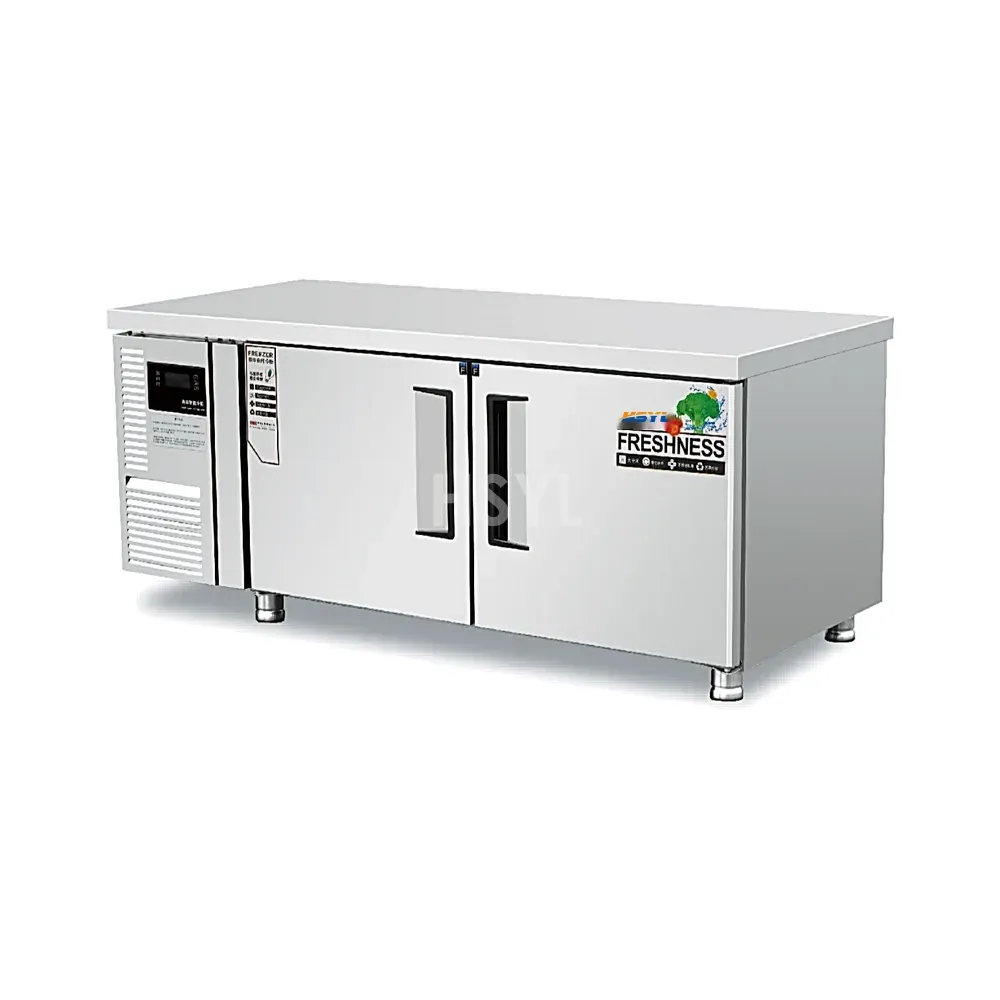
A commercial refrigerator for a food truck should be selected around the stock carried between replenishments, the usable aisle and the vehicle's operating conditions. Start with the storage format: a closed workbench cabinet, a preparation fridge and an upright cabinet solve different problems. Then compare the exact model's dimensions and confirm that it is suitable for the proposed mobile installation.
Listed litres help compare cabinets, but they do not tell you how many of your containers will fit, how quickly you can reach them or whether the appliance will maintain the required food temperature in your truck.
Choose the storage format before the capacity
| Format | Useful when | Trade-off |
|---|---|---|
| Closed workbench or undercounter cabinet | Stored ingredients need access below a work surface | Door swing, internal shelves and the refrigeration section reduce usable working and storage space |
| Preparation fridge with ingredient pans | The menu requires repeated assembly from several cold ingredients | Exposed ingredient access adds a different temperature-control duty; pan rails are not simply extra bulk storage |
| Upright refrigerator | The menu needs storage that cannot fit beneath counters | Height, door access, vehicle movement and the effect on layout and loading need review |
| More frequent replenishment from a suitable base | The operating route can reliably support it | Reduces onboard stock only if the replenishment and cold-chain arrangements are dependable |
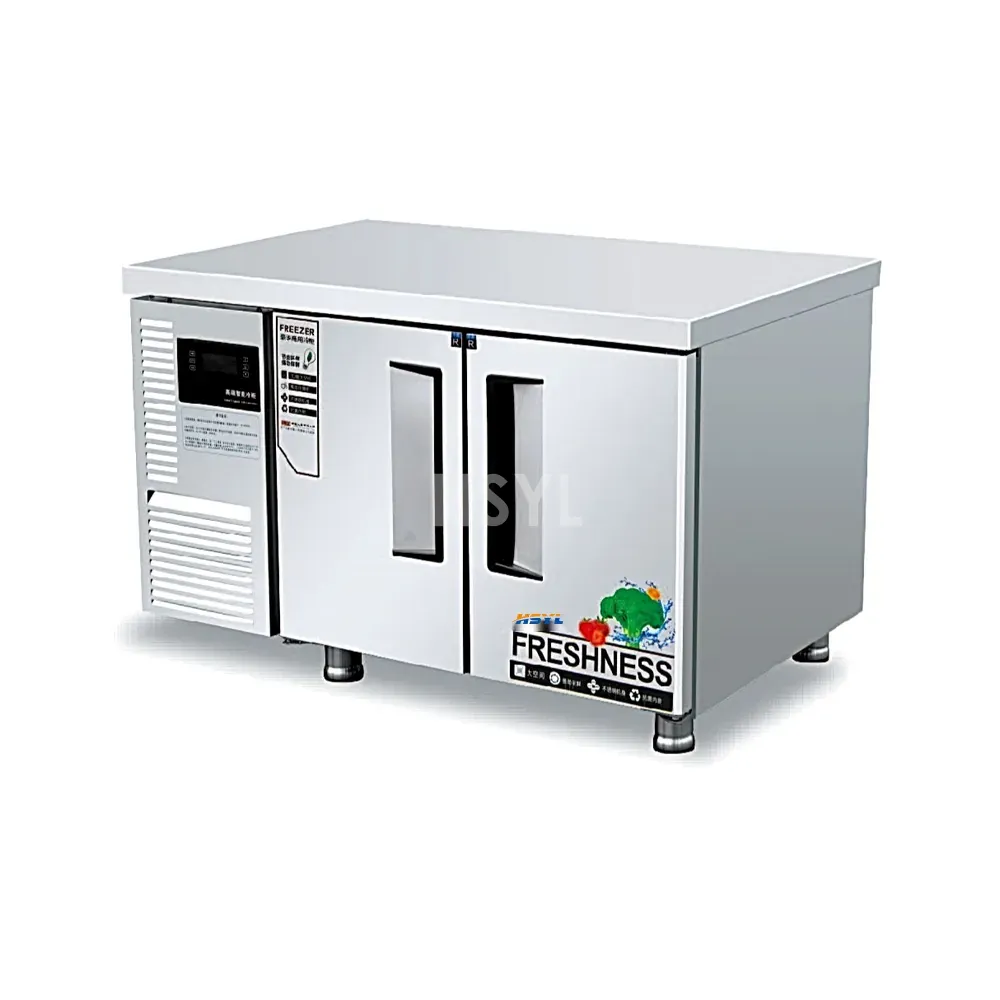
For a sandwich operation, a preparation fridge can reduce repeated door opening during assembly. For a menu drawing mostly from pre-portioned containers, a closed cabinet may be simpler. A refrigerator and a freezer are not substitutes merely because their external dimensions match.
Compare three catalog configurations by the space they consume
The following references appear in the EDDYSEN V.2024 catalog and the HSYL E Series workbench refrigerator range. They are commercial cabinet references for comparison, not pre-approved food-truck installations.
| Catalog configuration | Body dimensions W × D × H | Listed capacity | Listed net weight |
|---|---|---|---|
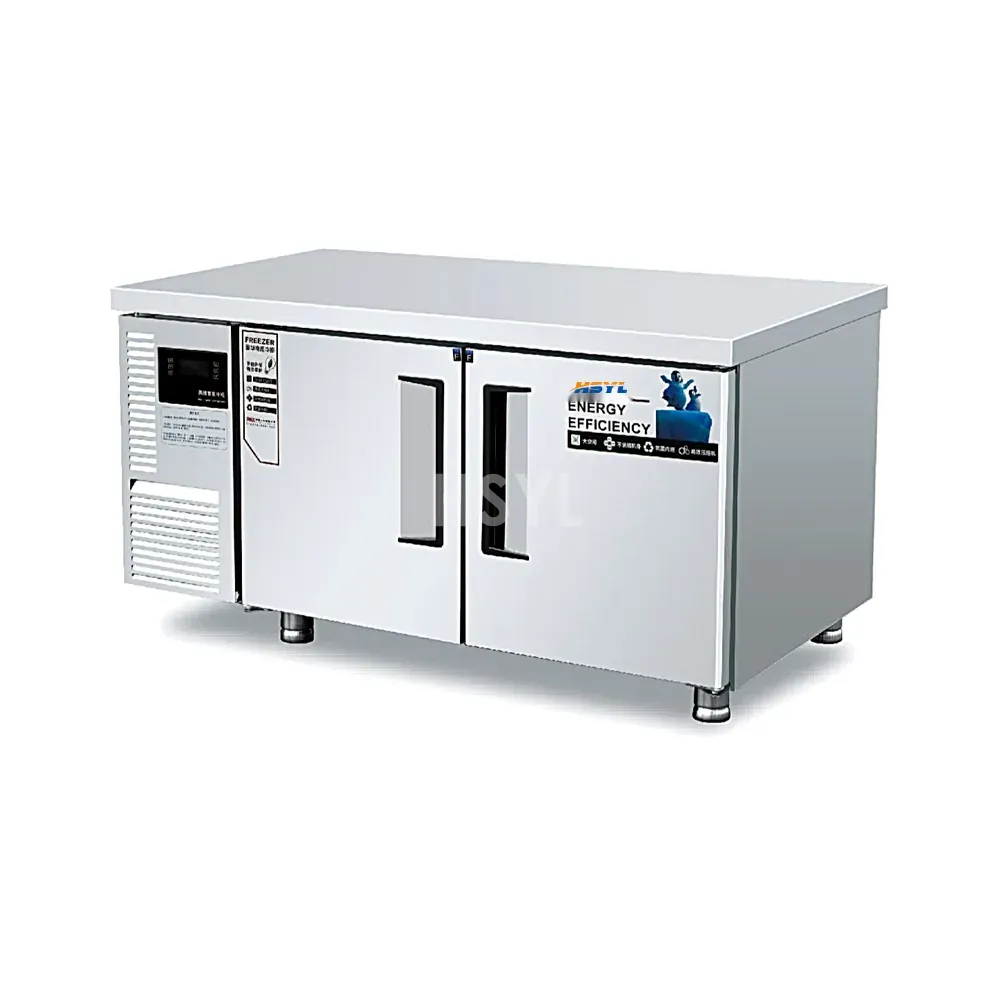
| ECUR12-2 (600) | 1200 × 600 × 800 mm | 160 L | 58 kg |
| ECUR12-2 (700) | 1200 × 700 × 800 mm | 200 L | 60 kg |
| ECUR15-2 (600) | 1500 × 600 × 800 mm | 235 L | 62 kg |
Moving from the 600 mm to the 700 mm deep 1.2 m configuration adds 40 L of listed capacity, while the body occupies another 100 mm of depth. Moving to the 1.5 m wide, 600 mm deep configuration adds 75 L compared with the smallest reference, but uses another 300 mm of counter length. Those are two different layout decisions.
The body footprints calculate to 0.72, 0.84 and 0.90 square metres respectively. These figures exclude door opening, service space, connections and required ventilation. Net cabinet weight also excludes stock, restraints and other installation items. Use the delivered configuration's drawing and weight for the vehicle design.
Convert the menu into containers, not just litres
Calculate what must remain onboard until the next replenishment. Then place that stock into the actual covered containers used by the team. Container shape, lids, shelf spacing and air circulation determine practical loading.
Illustrative stock calculation: if a service needs 80 portions and each uses 150 g of a particular chilled ingredient, the ingredient requirement is 12 kg before your chosen reserve. That is a stock calculation only. It does not convert directly to 12 litres of cabinet capacity and does not define safe storage conditions.
- List the ingredient quantities and containers for the busiest interval between replenishments.
- Measure the containers with lids fitted.
- Arrange them on a drawing of the actual usable shelves, leaving the manufacturer's required airflow paths clear.
- Separate items according to the kitchen's raw/ready-to-eat and allergen controls.
- Rehearse retrieval in service order. Frequently used items should not require unloading everything in front.
If the stock will not fit, compare a different cabinet layout with a revised replenishment schedule. Filling every visible gap can interfere with air circulation and access, so an empty-cabinet litre figure is not an acceptance test.
Protect the aisle and the refrigeration airflow
Mark the body, open doors, standing operator and adjacent equipment on the vehicle plan. A deeper cabinet may reduce aisle space; a wider cabinet may remove the landing area beside the cooker. Neither loss is obvious when comparing capacity alone.
Locate the condenser air inlet and outlet on the exact model. Do not box in a cabinet or place its grille against furniture because another refrigerator has a different ventilation arrangement. Hot equipment, sun exposure and repeated door opening are part of the operating conditions to describe to the supplier.
The direct-cooling versus fan-cooling guide explains the system distinction. For a truck, the final decision still depends on the cabinet's documented application, loading pattern and installation, rather than assuming one cooling label guarantees performance.
Plan refrigeration through loading, travel and trading
Write down where the refrigerator receives power during loading, transit, setup, service and return. Any change between supplies must preserve the required food-control procedure. A domestic plug description or a cabinet's normal kitchen use is not evidence of suitability for vibration, transport or an onboard inverter.
Rated watts are not measured daily kWh. An onboard electrical designer also needs the exact starting and running requirements, other simultaneous loads and the approved supply arrangement. Avoid sizing an inverter or generator from storage capacity.
Final acceptance should use the proposed stock layout and representative operating conditions, including door openings. Record the required product temperatures using your food-safety procedure; the cabinet's displayed air temperature alone does not establish the temperature of every food item.
Compare these refrigeration formats
Choose the cabinet format from stock handling and the available working area. These are product-family references; vehicle mounting and mobile operation require confirmation for the selected model.
E Series Workbench Cabinets
Compare worktop length, compartment access and the stock containers that must fit. The family includes refrigerator and freezer configurations, so identify the required storage duty before comparing quotations.
View product details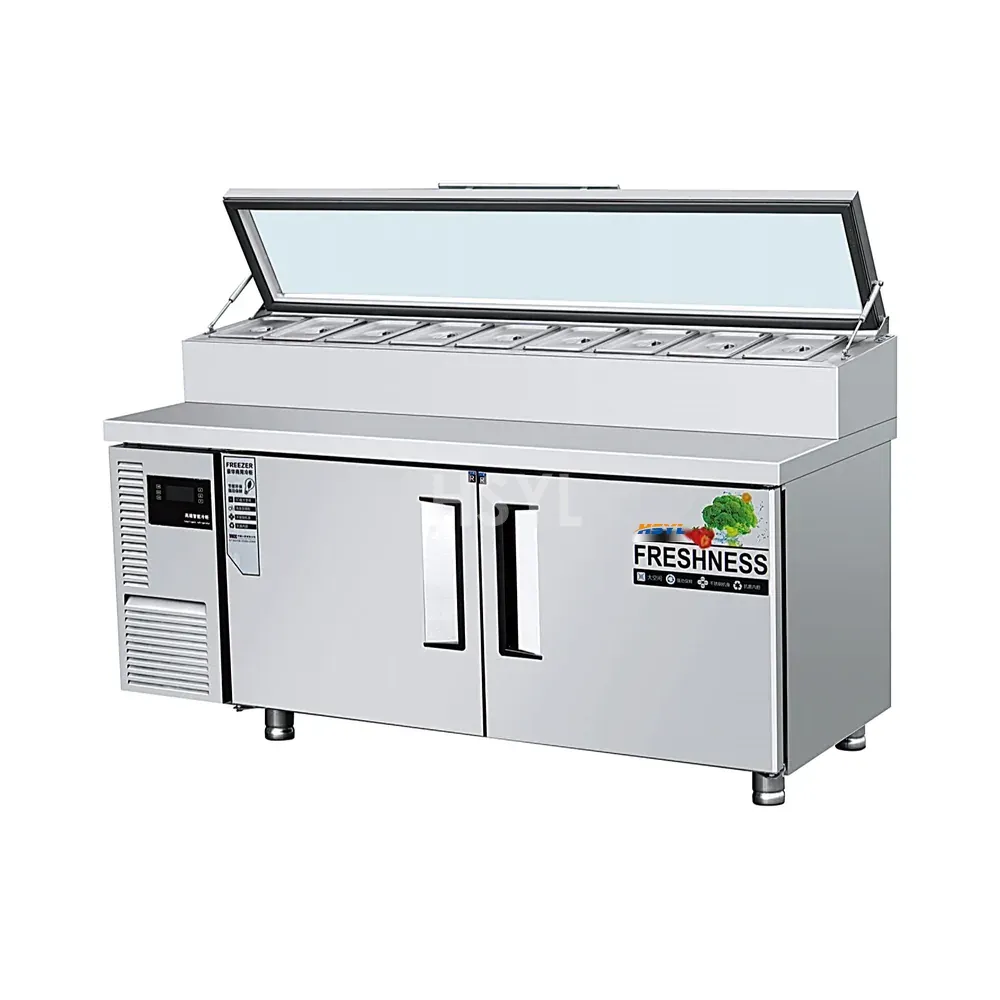
ECUR/EDTR Salad Preparation Fridges
For menus assembled from chilled ingredients, assess the preparation area and ingredient replenishment together. Confirm pan arrangements and cabinet access before allocating counter space in the truck.
View product details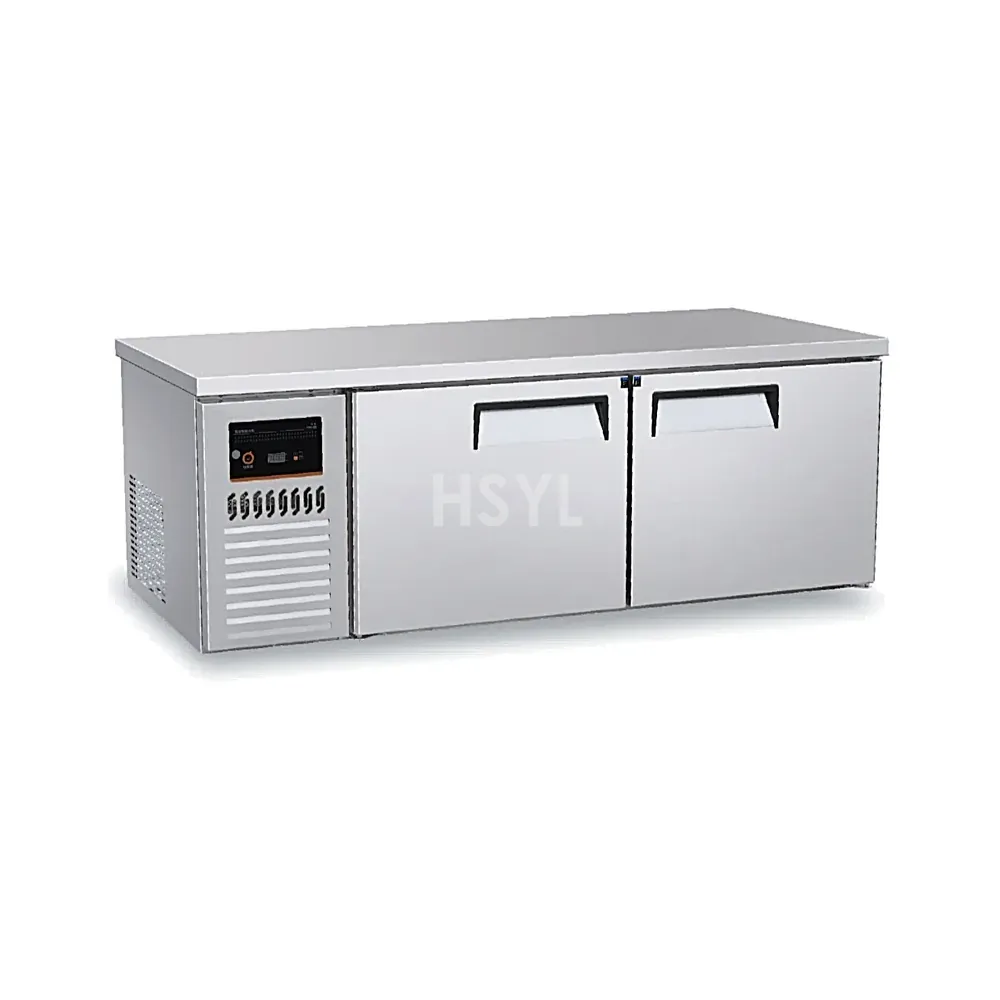
Q-WBC Workbench Refrigerator
Include the Q-WBC direct-cooling format in the cabinet comparison. Check the intended loading and door-opening routine, cleaning access and the exact installation instructions against the truck layout.
View product detailsMake the purchase decision explicit
If the main constraint is aisle width, compare shallower cabinets before adding depth. If counter length is available, a wider cabinet may provide a more workable trade-off. If neither fits, change stock or replenishment rather than selecting a refrigerator that prevents safe work.
Request a food-truck refrigeration comparison with the stock containers, opening dimensions, aisle drawing and supply stages. Ask for the exact configuration, mounting and mobile-use suitability to be confirmed before ordering.
Frequently Asked Questions
How many litres of refrigeration does a food truck need?
Start with the containers and stock needed between replenishment runs. List container dimensions, filled quantities and the products that need separation, then check the arrangement inside the actual cabinet. Catalog litres alone do not show whether your containers fit or whether the air circulation and access remain workable.
What is the trade-off between the two 1200 mm ECUR examples?
The cited catalog lists ECUR12-2(600) at 1200 × 600 × 800 mm, 160 L and 58 kg, and ECUR12-2(700) at 1200 × 700 × 800 mm, 200 L and 60 kg. The deeper cabinet adds 40 L of catalog capacity but also 100 mm of body depth. Check the resulting aisle and door movement instead of choosing on volume alone.
Can the refrigerator operate while the vehicle is moving?
Do not assume so from a normal commercial refrigerator listing. Ask whether the exact model, mounting, power arrangement and intended operating conditions are suitable for mobile use and travel. This guide compares cabinet dimensions and storage duties; it does not establish vehicle approval or permission to run a listed cabinet in transit.
Is the cabinet footprint the full installation space?
No. Body width multiplied by depth describes only the cabinet footprint. Doors, handles, ventilation, connections, service access and the operator's movement can require more room. Draw the full installation using the selected model's instructions and test door opening with the neighboring equipment in place.
Will a larger refrigerator automatically recover faster after frequent opening?
No. Storage volume does not establish pull-down or recovery performance. Product loading, starting condition, door-opening frequency, ambient conditions and the refrigeration system all affect the result. Compare the actual service pattern with the model's intended duty; a storage cabinet should not be assumed to perform a separate rapid-chilling task.
Plan the Equipment Around Your Kitchen.
Share your menu, peak service demand, available space and site utilities. Tell us which equipment you are considering so we can review the requirements with you.