Outdoor Catering Equipment
Build an outdoor catering equipment package for delivery, on-site finishing or full cooking. Plan reserve stock, service flow, site utilities and pack-down.
Outdoor catering equipment should follow what happens to the food at the event. Delivering prepared meals for controlled holding, finishing prepared ingredients on site and cooking from raw ingredients need different equipment packages. Choosing the operating model first prevents transporting a full kitchen when a smaller service setup would meet the menu.
Start with the available preparation base, event menu, service window and venue utilities. Include the return journey: an event is not complete when the last meal is served if hot equipment, waste water and used utensils cannot be packed and removed safely.
Choose one of three operating models
| Operating model | Core equipment functions | Work moved off site | Main limitation |
|---|---|---|---|
| Deliver and hold | Suitable temperature-controlled transport, holding, serving and handwashing | Most preparation and cooking | Food quality and the validated transport-to-service process |
| Finish on site | Cold or hot transport as appropriate, limited cooking, landing space, holding and service | Ingredient preparation and selected cooking stages | Available utilities and the finishing rate during the queue |
| Cook on site | Storage, raw preparation, cooking, separation, washing, waste and service | Only the processes deliberately retained at the base | More equipment, staffing, site services and hygiene controls |
If a venue offers only a small service area with no suitable cooking installation, moving more preparation to the base may be the practical answer. If freshly cooked texture is essential, a deliver-and-hold plan may not meet the menu even when the holding equipment is large enough. Compare food quality at the moment of service, not just at dispatch.
Build a load list by function
- Transport: compatible containers, suitable hot or cold transport equipment, restraints and a loading sequence.
- Storage: enough controlled storage for stock between replenishments, plus separate dry storage.
- Cooking or finishing: only the appliances required by the chosen on-site process.
- Holding and serving: equipment compatible with the pans, portions and replenishment method.
- Hygiene: the agreed handwashing, utensil handling, potable water and waste-water arrangements.
- Support: stable tables, landing areas, approved utility distribution and protected access routes.
Hot holding equipment is not automatically suitable for reheating chilled food. Likewise, storage refrigeration is not automatically a rapid-cooling system. Assign each temperature-changing process to equipment intended for that duty and to your food-safety procedure.
A worked example: plan replenishment before buying more holding space
Illustrative event, not a project result: assume 120 portions of one dish are required over a defined service period and your own portion trial shows that one selected pan holds 20 acceptable portions. The dish needs six pan loads in total. This does not mean all six must be open on the serving counter at once.
| Position | Example quantity | Reason |
|---|---|---|
| Active service | 2 pan loads | Feeds the planned serving positions |
| Controlled reserve | 4 pan loads | Replenishes service without exposing the whole stock at once |
| Empty-pan return | Space for used pans | Keeps dirty returns away from reserve food |
The numbers illustrate stock allocation, not safe holding time or a universal pan capacity. Change them to match the dish, portion size, serving speed and validated temperature-control procedure. Include the time and person needed to bring a replacement pan to the counter.
If service is slow because staff must leave the counter to retrieve each pan, relocating reserve holding or assigning replenishment may help more than increasing the cooking capacity.
Design the working route and the return route
- Unload into a controlled receiving and storage area.
- Move ingredients or prepared food to the assigned cooking or holding stage.
- Transfer completed food to a clean landing and serving area.
- Replenish from reserve storage without crossing customer queues.
- Collect used utensils, waste and empty containers through a separate return route.
Mark these areas on the venue plan, including customer movement and delivery access. A narrow gap that looks adequate for one operator may become blocked when a trolley, open cabinet door and queue all arrive together. Set up the main tables and containers before finalizing the equipment order.
Check outdoor suitability separately from cooking performance
A commercial appliance intended for an indoor kitchen is not automatically suitable for rain, wind, dust or exposed electrical connections. A canopy does not, by itself, make indoor equipment suitable for outdoor use. The proposed model, location and weather protection need to be approved for the application.
Give the supplier and installers the site conditions, utility locations, available supply, expected ambient environment and protection arrangements. Gas supply, electrical distribution and ventilation must be designed for the actual setup. Avoid sharing high-load equipment through improvised extensions or assuming every venue socket can support a cooking station.
Refrigeration should be assessed under its actual location and door-opening pattern. A cabinet placed beside a hot appliance or in direct sun faces different conditions from a shaded storage area. Preserve the manufacturer's ventilation space instead of enclosing the cabinet simply to improve its appearance.
Compare products by their role in the event
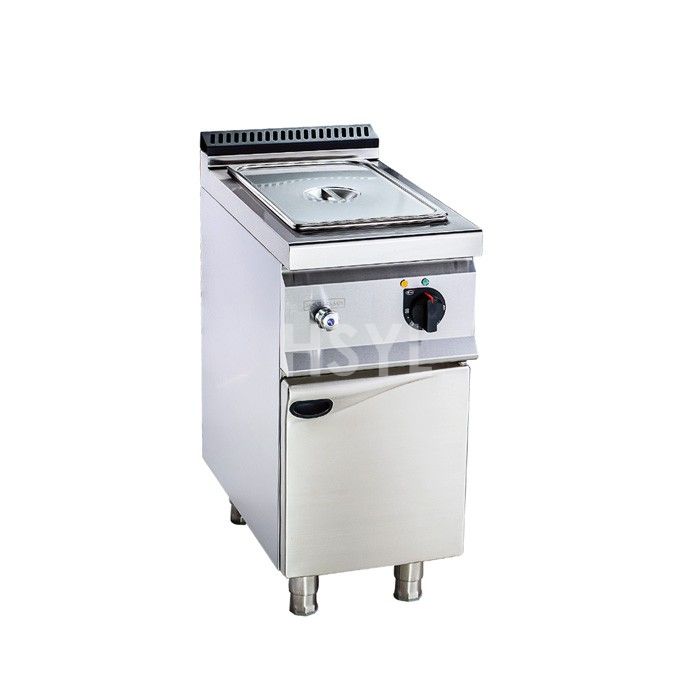
The commercial bain-marie food warmer is relevant to a pan-based holding station, while the SB-5700 soup kettle addresses a different serving format. The ECUR salad preparation fridge range may be relevant where cold assembly is part of the menu.
These product pages identify equipment functions. They do not establish outdoor approval, transport suitability or compatibility with a particular event site. Select the final configuration from the exact model documentation.
Products to assess for holding and cold storage
These appliances cover different parts of the catering route. Confirm transport and the permitted operating environment separately; product photographs are not evidence of outdoor suitability.
CK-BWTC-01 Bain-Marie
For food already cooked and delivered hot, compare the pan arrangement and replenishment route at the service counter. Validate the holding process with the actual food and serving pattern.
View product details
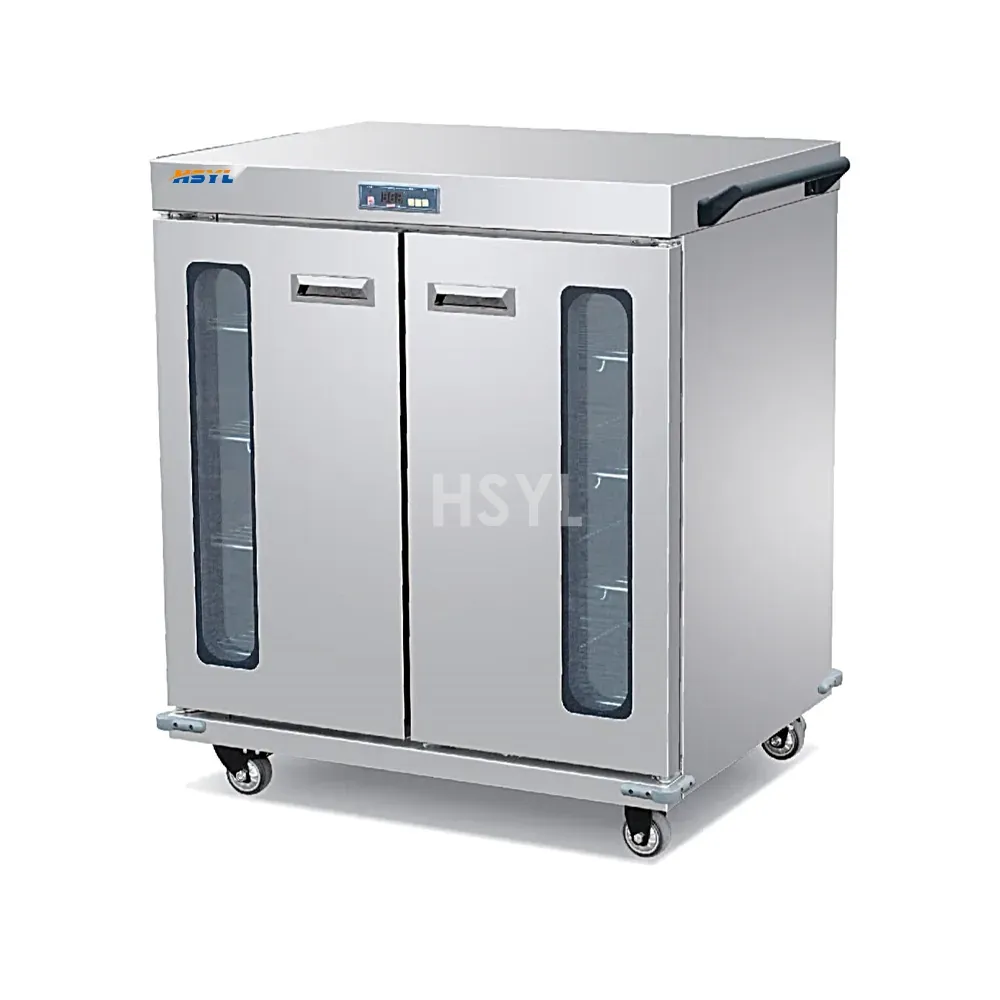
E234-BCW02-11 Banquet Cart
For moving loaded trays between preparation and service, compare rack fit, door access and the route to the counter. Confirm the holding duty, movement conditions and services for the exact configuration.
View product details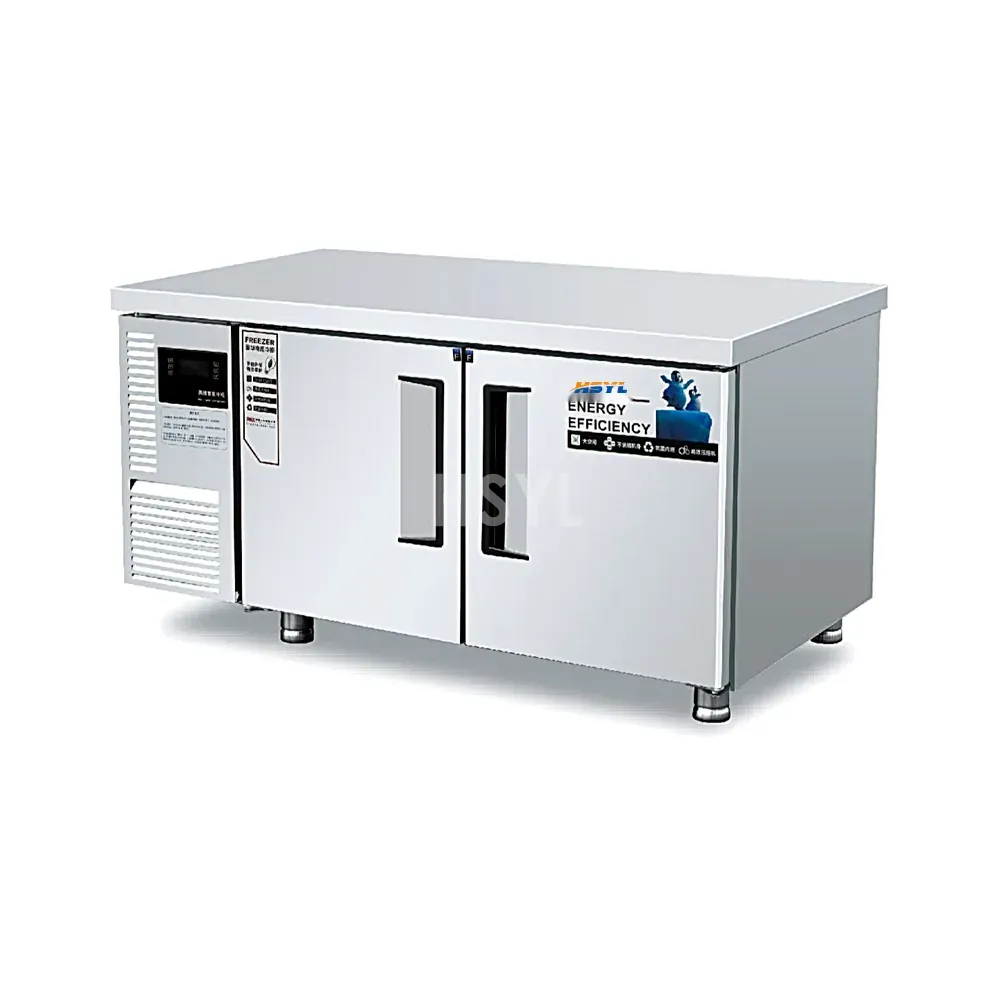
E Series Workbench Cabinets
For chilled stock beside preparation, check your containers, loading quantity and door-opening pattern. Select the correct refrigerator configuration and confirm ventilation and operating conditions at the event.
View product detailsPack down without creating the next service problem
Plan shutdown, permitted cooling, cleaning, draining, waste collection and return storage before the event. Allocate space for dirty items separately from equipment and containers ready for the next service. Check vehicle loading access with the largest equipment and its transport packaging.
Request an outdoor catering equipment package with the operating model, menu, portion schedule, venue plan and utility information. Ask for a proposal grouped by transport, storage, cooking, holding, service and hygiene so you can see exactly which responsibilities remain with the venue or catering team.
Frequently Asked Questions
Can indoor commercial appliances be used outside under a canopy?
A canopy does not by itself make an indoor appliance suitable for outdoor use. Rain, wind, moisture, ground conditions and the way services are connected can affect suitability. Choose equipment whose instructions permit the intended environment and have the event installation reviewed for the actual location.
What is the minimum equipment package for an outdoor catering event?
It depends on where the food is produced. Deliver-and-serve needs transport, suitable holding and a workable service station. On-site finishing adds the finishing appliance and preparation or landing space. Full on-site cooking adds the complete production workflow, utilities and cleaning arrangements. Select one operating method before building the equipment list.
How do I estimate the number of serving pans?
Divide the required servings by the validated usable servings per pan for that dish. For example, 120 servings at 20 servings per pan require six pan loads in total. That is not necessarily six pans on display at once: the holding and replenishment plan determines how many are in service and how many are in reserve.
Can I choose a generator just by adding the appliances' kW?
The total connected load is only a starting point. Supply voltage and phase, starting characteristics, overlapping operation and other site equipment also matter. Give the complete equipment schedule to the power supplier or electrical designer and request a suitable temporary-power plan. This guide's catering examples are not generator ratings.
What is commonly missed when planning pack-down?
Teams may plan food service but forget cooled equipment handling, safe waste removal, dirty-utensil containers and the order in which utilities are disconnected. Include those tasks in the event schedule and vehicle loading plan. A station that serves well but cannot be cleaned, disconnected and moved as intended is an incomplete package.
Plan the Equipment Around Your Kitchen.
Share your menu, peak service demand, available space and site utilities. Tell us which equipment you are considering so we can review the requirements with you.